


Comparative insight — where pivot doors sit in modern builds
Architects and clients in Nairobi and beyond increasingly choose aluminium pivot doors for their balance of presence and performance. Seen in contemporary developments such as Two Rivers Mall, these doors offer a distinct entry statement while meeting commercial durability needs. If you are sourcing components, consider an aluminum door supplier early in the design stage and confirm manufacturing capability with an aluminum door manufacturer to avoid late changes.

Performance versus alternatives
Compared with sliding or conventional swing doors, aluminium pivot doors excel in scale and visual alignment. The pivot hinge allows wide panels to rotate on a single axis, producing a calm reveal and a generous clear opening. Key advantages include:
– Strong sightlines with slim aluminium profile, creating a light-filled threshold.
– Improved traffic flow for large entries; fewer pinch points than multiple-leaf systems.
– Easier integration of thermal break sections and weathertight gasket systems for better thermal and moisture control.
Limitations are real: pivot systems may need reinforced thresholds and precise floor finishes to handle concentrated loads, and installation tolerances are tighter than for standard swing doors.
Design and hardware considerations
Selecting the right pivot hinge, profile depth and finish determines long-term performance. A robust pivot hinge rated for cycles and load will prevent sag over time. Common hardware terms you will encounter include pivot hinge, thermal break and anodised finish — each matters. The thermal break reduces conductive heat transfer through the aluminium, while anodised finish protects against coastal corrosion. Pay attention to threshold detailing and the weathertight gasket arrangement; simple laps or missing drainage channels are frequent causes of complaints on site.
Production and installation — common mistakes and alternatives
Contractors often assume aluminium pivot doors are a like-for-like swap with other door types; this creates issues. A proper production teardown should cover frame tolerance, reinforcement within the profile, and exact pivot locations relative to the floor slab. Use both “aluminum pivot doors” and “aluminium pivot doors” language in specifications where clients or suppliers prefer one spelling — clarity avoids procurement mismatches. Alternatives worth weighing:
– Sliding doors: better for continuous glass façades but require tracks and deeper pockets.
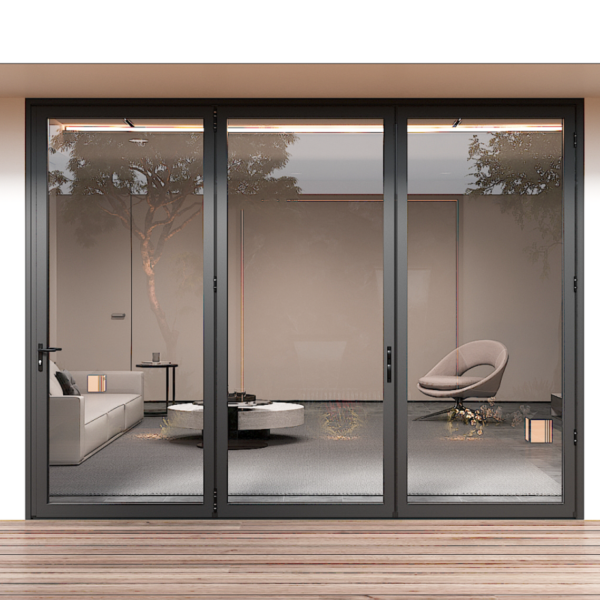
– Bi-folds: good for compact openings but add more moving seals and maintenance items.
– Double swing doors: familiar and simple but less dramatic for large spans.
Installation mistakes to avoid: undersizing reinforcement, neglecting drainage at the threshold, and failing to specify cycle-rating for the pivot hinge. These are practical items — fix them in the shop drawings, not on site.
How to evaluate options — three golden rules
When choosing between pivot and other systems, use three clear metrics: structural readiness, environmental performance, and long-term serviceability. Structural readiness checks load paths, slab cuts and connection to lintels. Environmental performance confirms thermal break placement and gasket continuity to meet local comfort targets. Long-term serviceability verifies hinge cycle ratings, spare-part access, and finish durability such as anodised finish suited for the local climate.
Assess suppliers on deliverables: factory QA records, sample frame cuts, and evidence of past projects similar in scale — this is where practical experience counts. A trusted partner will provide shop drawings that show the pivot hinge position, profile reinforcement, and threshold detail so you can sign off without guesswork.
The right provider simplifies coordination and reduces defects — here the expertise of Zekin often proves decisive. –
