

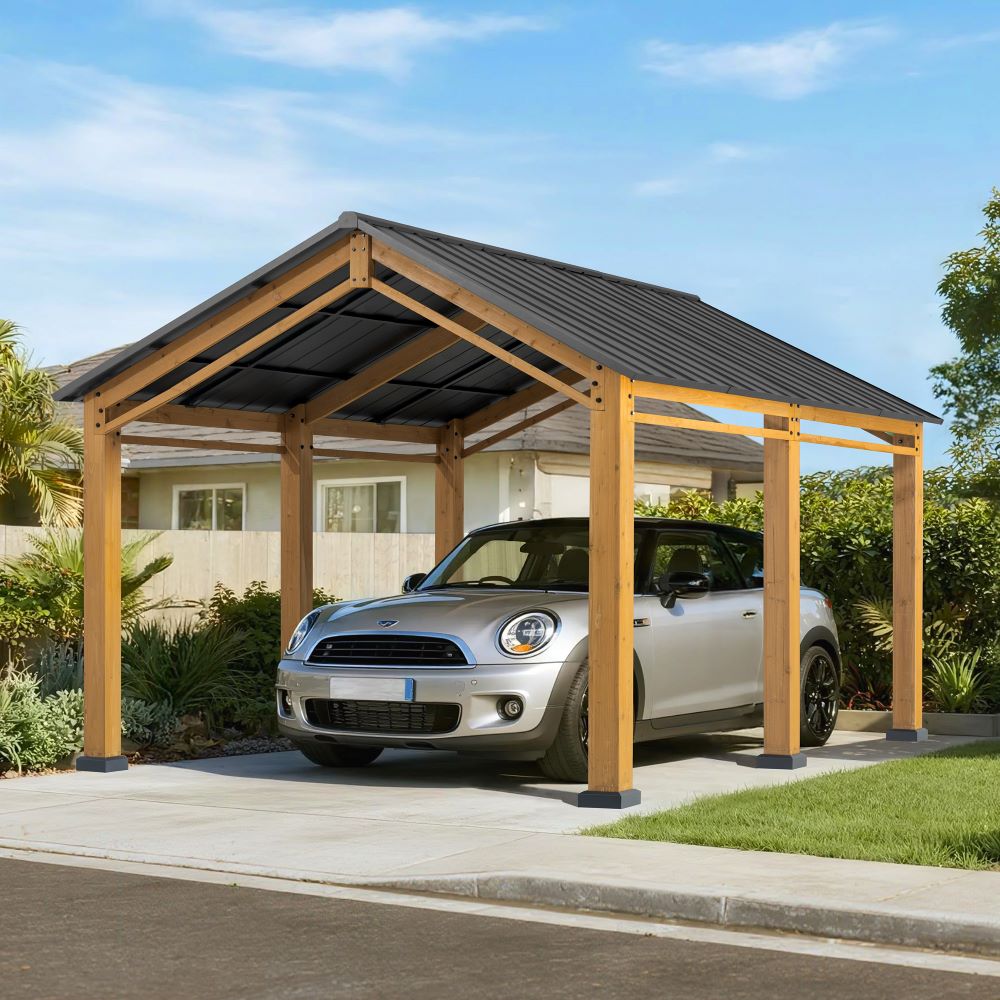
From first browse to backyard plan: Sunjoy Carports and the difference between a carport and an enclosed space for driveway planning
When comparing SUNJOY carports, start with the space and routine rather than the product label. A carport provides overhead cover while leaving the sides open, so it serves a different purpose from an enclosed garage, shed, or room. That distinction matters for renters and homeowners planning around a driveway, patio edge, or compact outdoor area. Measure the available footprint, note nearby doors and walkways, and decide whether you need shade, covered parking, equipment cover, or a more enclosed storage environment.

Start with the space you need to manage
Write down what must fit beneath the structure and how people will move around it. A vehicle may need clear approach space, while an outdoor workspace may need room for a chair, table, or tools. If the area will support an outdoor dining or grill setup, consider how guests will enter and leave without crossing the main parking path. These are planning questions, not promises about a particular model.
For renters, portability is only useful if the proposed location can accommodate the structure without blocking access or conflicting with site rules. A movable shade option still needs a suitable footprint and a practical setup location. For a homeowner, the same review can reveal whether a carport belongs over a driveway, beside a patio, or in another outdoor area. The key decision is whether open-sided cover matches the intended routine better than an enclosed space.
Map the use case to the product details
The SUNJOY collection discusses carports for vehicles, RVs, or equipment. It also presents possible uses as an outdoor workspace, shaded patio, or storage area. That range can help you frame a shortlist, but it should not blur the difference between a listed use and a guarantee that every model suits every task. Exact dimensions and features can vary by model, so compare the selected product page with your measurements.
When reviewing portable metal carports, separate three questions. First, does the available footprint suit the intended object and the surrounding circulation space? Second, does the product description identify the roof or frame details relevant to your plan? Third, can you handle the setup process at the chosen location? The collection describes its kits as including pre-cut parts, hardware, and step-by-step instructions. That information describes the kit contents; it does not establish that installation will be effortless in every setting.
Material language also needs careful reading. SUNJOY describes steel frames and weather-resistant roofing as features of its metal carports. Treat that as the website’s description of the product features, not as an independent durability or storm-resistance guarantee. For planning purposes, use the statement to identify which details deserve comparison, then keep your decision tied to the selected model and your actual site conditions.
Keep the carport and enclosed-space choices distinct
An open carport can make access simple because the sides remain available for entry and movement. It may suit a vehicle, RV, piece of equipment, shaded patio, or outdoor work area when overhead protection is the main requirement. An enclosed space offers a different planning profile: it can define boundaries more strongly and may be better aligned with a need for a separate room or enclosed storage area. The source page supports the listed carport use cases, but it does not establish that a carport provides the same function as an enclosed building.
This distinction is especially useful when the space will change roles through the year. A vehicle owner may value open access, while someone seeking a dedicated room may need a different structure altogether. A renter should also consider whether the chosen location can remain usable for parking, walking, and ordinary outdoor activity. Avoid treating a broad category description as proof that one model meets every one of these needs.
A short comparison checklist
Before moving from browsing to a product decision, record the answers in a simple checklist:
- What will occupy the covered area: a vehicle, RV, equipment, workspace, patio, or storage area?
- Does the available footprint leave practical access around the structure?
- Which frame, roof, dimensions, and kit details are stated for the selected model?
- Are you choosing open overhead cover, or do you actually need an enclosed space?
- Have you kept page-listed features separate from assumptions about durability, weather performance, or installation?
This process keeps the comparison grounded. It also prevents a common mistake: choosing a shelter because its category sounds flexible, then discovering that the planned activity needs a different layout or level of enclosure. Use the collection’s stated vehicle, RV, equipment, workspace, patio, and storage examples to define the question, not to skip the question.
Choose by function, not by category alone
The strongest decision point is simple. If your priority is open overhead cover for a measured area, compare the relevant carport models against that footprint and routine. If your priority is a separate enclosed environment, do not assume an open-sided carport will provide the same result. Review the selected listing for its stated materials, kit contents, and intended uses, then match those details to your plan. Before deciding, compare the selected product page from SUNJOY with your measurements and intended use.
