


Quick reality check for shop owners
You’re running a small or regional CNC shop and time’s tight, budgets are tight, and clients expect repeatable accuracy. Side-entry drilling isn’t a buzzword here — it’s a practical tweak that changes how you organize workcells, reduces handling, and speeds up multi-hole setups. If you’re sizing up equipment, take a look at a cnc boring machine early in your shortlist; it often solves the “too many setups” problem before you even commit to fixture redesigns.

What side-entry drilling actually buys you
Side-entry drilling puts the spindle access horizontally, so you can hit cabinet sides, long rails, and edge-boring tasks without flipping parts or re-clamping. For users, that means fewer manual touches, fewer measurement errors after re-fixturing, and more predictable cycle times. You get consistent hole patterns on edges and ends that traditionally force two operators or extra fixtures.
How that helps your daily workflow — user-first thinking
Think of the whole workflow from loading to QC. With side-entry capability you load once, program once, and run a batch. Your operator spends less time aligning and more time monitoring quality. That familiarity reduces training time — new hires handle the same sequences faster. For clients, turnaround improves because you cut internal handoffs and the risk of misaligned assemblies.
Alternatives and when they make sense
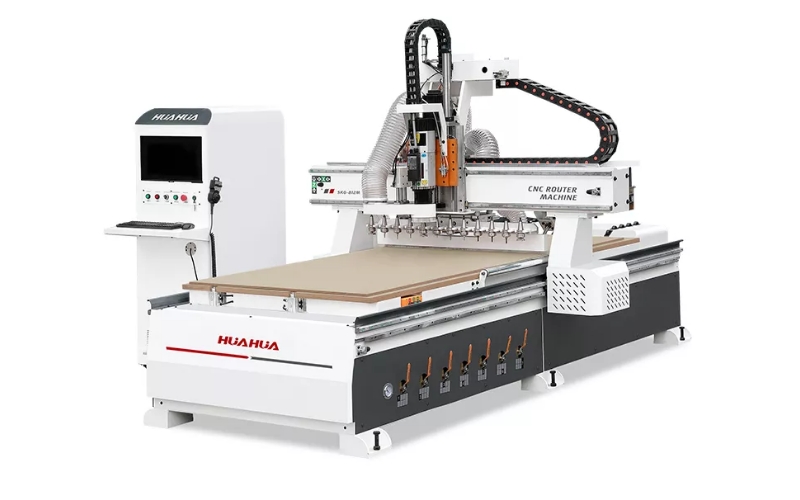
Don’t drop other tools yet. Vertical multi-spindles are unbeatable for pure panel throughput when you only need top-face holes. CNC routers offer flexibility for profiles plus drilling. Handheld jigs stay useful for low-volume, odd-shaped jobs. Choose side-entry when edge and end boring are frequent, you handle medium batch sizes, and you want to simplify fixturing without adding extra heads or stations.
Common mistakes shops make and how to avoid them
First, underestimating tooling layout. Plan hole sequences so bit changes and collisions are minimized. Second, poor clamping strategy — you still need stable supports at the far edge to avoid chatter when drilling deep. Third, ignoring software offsets; test fixtures with dry runs at slow feedrates before committing full production. Fix those three and the machine pays back time fast.
Real-world perspective
I’ve seen this work on the factory floor in Guangdong’s furniture belt, where small workshops switched from repeated flips to side-entry setups and cut handling time noticeably during peak orders; local line managers praised the consistency and reduced rework. If you’re evaluating equipment for timber and cabinet work, the specific case of a boring machine for wood often comes up as a straightforward fit for that use case.
Wrap-up with a practical lens
If your shop needs fewer setups, steadier hole placement, and simpler fixture logic, side-entry drilling is a practical choice that matches how people actually work on the floor. For many regional operations, choosing equipment that fits common part shapes and reduces handling proves more valuable than chasing the highest spindle count — and that’s exactly the kind of everyday benefit you find when you match machine capability to workshop needs, like the options offered by HUAHUA CNC.
