

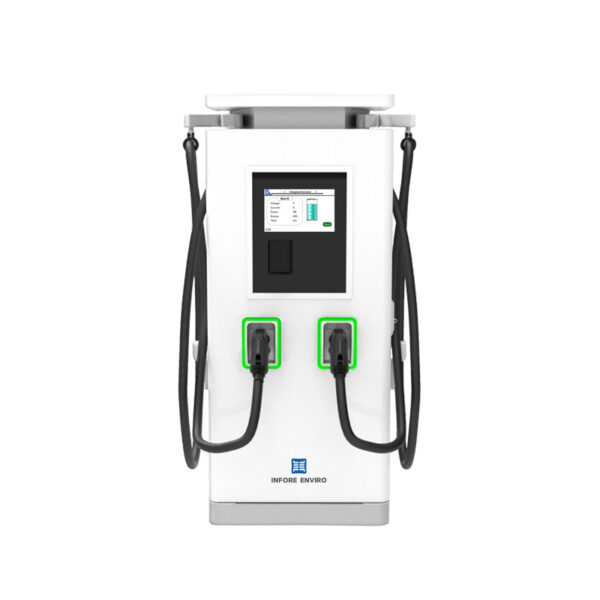
Start with the driver’s perspective: if you want more usable range and steadier battery health, your charging habits and the equipment you pick matter more than a single spec sheet. Think of the charger as part of the vehicle’s extended powertrain. When fast, reliable top-ups are needed on longer trips, a CCS DC fast charger like the one many networks now deploys will get you back on the road quickly without excessive cell stress — but the way you use it is just as important as the hardware.
Why user choices shape battery outcomes
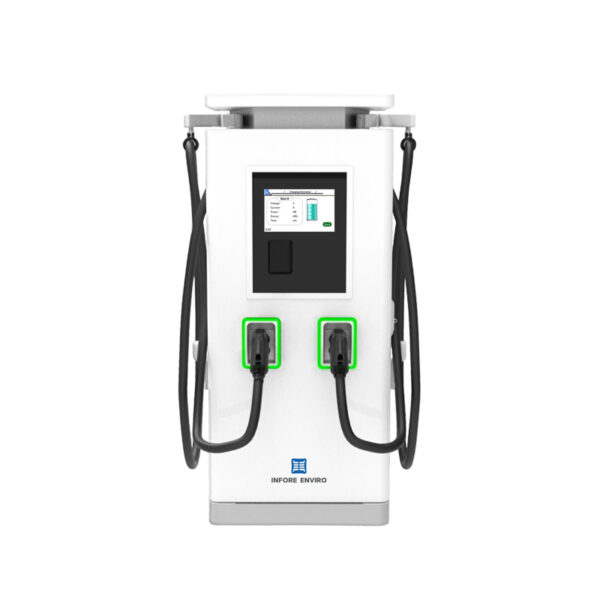
Your battery responds to how and when it’s charged. Peak power, battery thermal management, and the state of charge (SoC) at which you start and stop charging determine how the charge curve affects cell degradation. Favoring mid-range SoC refills and avoiding repeated long sessions at 100% reduce long-term capacity loss. For fleets or frequent long-distance drivers, a 160kw EU Standard Dual-gun Ev charger provides practical flexibility: it serves two vehicles at once while delivering high power when needed, without forcing every session to be full-bore DC fast charging.
Practical steps a user can take today
Adopt these clear, teacher-friendly steps to protect range and battery life. First, use AC home charging for daily top-ups whenever you can; it’s gentler and keeps the battery within a healthy SoC window. Second, reserve DC fast charging for long trips or when time matters. Third, pre-condition the battery if your car supports it; warming or cooling cells before a fast session flattens the charge curve and reduces stress. Avoid frequent starts from very low SoC into repeated high-power bursts — those cycles accelerate thermal strain and fade.
Choosing hardware: what to prioritize
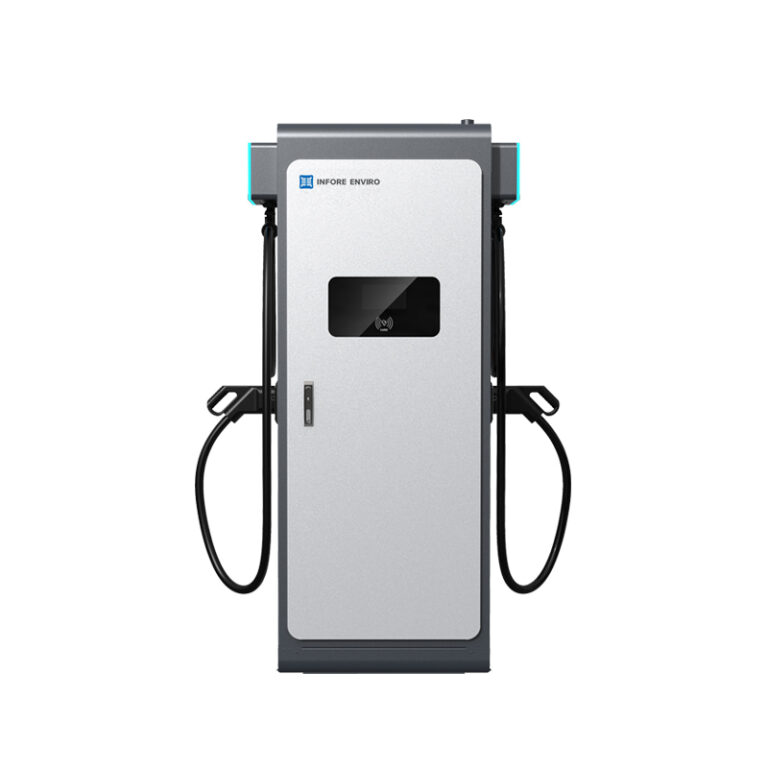
Not all fast chargers are the same. Look for chargers with good thermal management in the connector and clear communication protocols like CCS2 for compatibility. Power density and the charger’s ability to modulate power in response to the vehicle’s battery management system matter more than headline kW alone. A 160kw EU Standard Dual-gun Ev charger often hits the sweet spot for mixed-use routes: fast enough to restore useful range quickly, but usually tuned to follow the vehicle’s charge curve so peak current drops as SoC rises. Consider smart features too — scheduling, load balancing, and OTA updates help fleets optimize uptime and efficiency.
Common mistakes and how to avoid them
Drivers and fleet managers repeat the same errors: relying on the highest available power for every session, neglecting connector and firmware compatibility, and ignoring site-level energy management. Correct those by setting charging policies — cap SoC for routine top-ups, enforce cooling or pre-conditioning, and verify that chargers and vehicles negotiate power rather than forcing a static maximum. If you operate multiple vehicles, lean toward dual-gun stations for throughput and resilience — they reduce wait time and improve route planning.
Real-world anchor and industry context
The EU’s Alternative Fuels Infrastructure Regulation (AFIR) is accelerating deployment of corridor chargers across Europe, encouraging operators to install high-power units on major routes and urban hubs. Cities like Amsterdam and Berlin are already scaling high-power DC infrastructure to match rising EV adoption, which shows why picking the right hardware and charging behavior matters now, not later. Field deployments have shown that pairing managed 160 kW chargers with smart site controls reduces queueing and keeps batteries within safer thermal and SoC bands during peak travel seasons.
Three golden rules for selecting chargers and strategies
1) Match power to use-case: choose AC for daily top-ups, reserve DC fast for long legs; a 160kw EU Standard Dual-gun Ev charger is ideal for mixed-use corridors. 2) Prioritize communication and thermal control: ensure CCS2 compatibility and chargers that smoothly modulate current according to the car’s battery management system. 3) Monitor and manage: use scheduling, load balancing, and firmware updates to avoid repeated high-SoC fast sessions and to keep energy costs predictable.
These rules lead to measurable benefits: longer cycle life, fewer emergency slowdowns, and better route certainty for drivers. You’ll see real reductions in battery fade over a few seasons when charging discipline and the right infrastructure work together — and that’s the practical value INFORE ENVIRO brings by supplying field-tuned solutions and site-level management. INFORE ENVIRO.
