

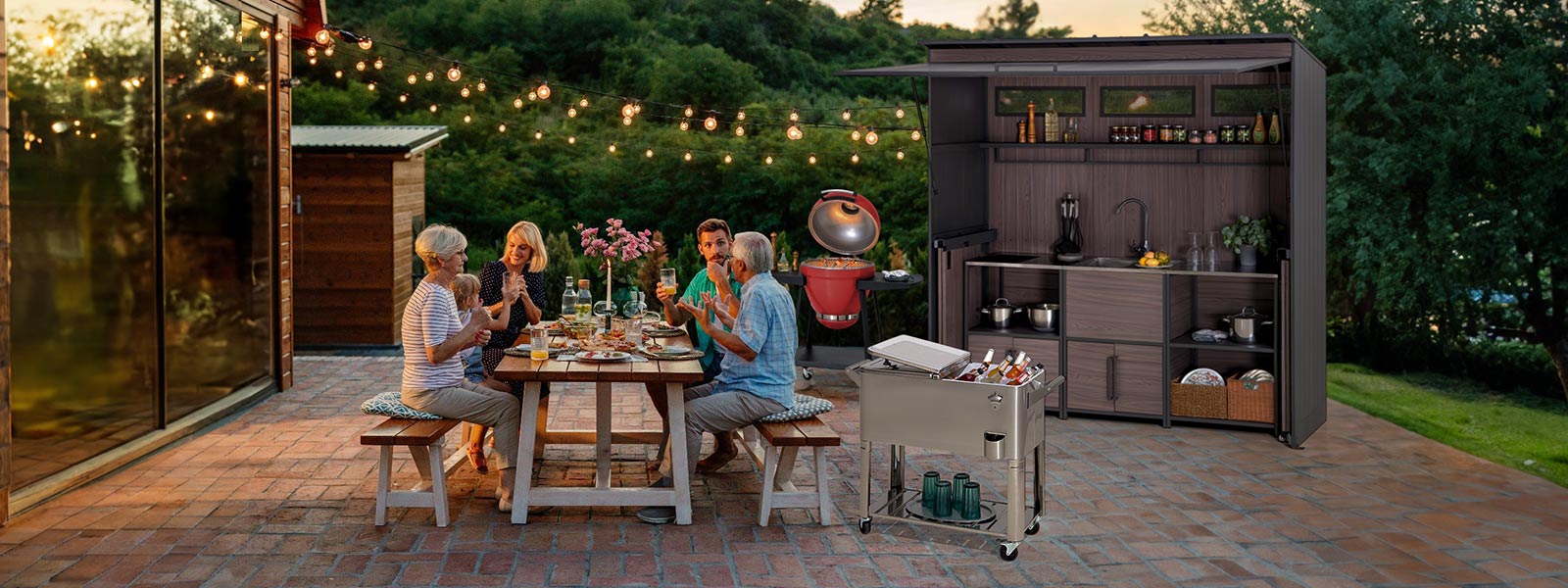
Early lessons from hands-on outdoor cooking missteps
I remember the first clear evening I tried to host six neighbors around my newly tiled patio—smoke, an awkward countertop, and a stubborn grill insert that refused to light (classic rookie move). After that night I counted the costs: three ruined steaks, two neighbors who left early, and a propane bill that jumped 22% the next month—so what did that tell me? Outdoor Cooking was supposed to be simpler, but the layout and gear betrayed the idea. I built an outdoor kitchen with a popular stainless steel built-in grill and a side burner in May 2019 on my Cape Cod back porch; the unit had great searing (infrared searing) on paper, yet my workflow—no prep counter near the grill—slowed every service down. I’ll be frank: the traditional approach (stacking appliances without flow thinking) hides real pain points—cross-traffic, weather exposure of LP hookups, and an awkward lack of shelter for food staging. That design genuinely frustrated me; I lost time and appetite, and I learned to look past marketing specs toward how people actually move and cook.

What went wrong—specifically?
I can point to two practical flaws. First, brand-focused specs emphasize BTUs and enamel grates while ignoring the small things that cost you minutes: lack of prep space, no nearby refrigeration, and poor wind protection for your burners. Second, installers treat an outdoor island like an indoor kitchen—wrong materials, wrong clearances; I had to refasten the vent hood twice after winter storms. Those are not abstract; in June 2020 I replaced the original hood, and the new stainless model cut smoke back by half — measurable, not just opinion. The deeper takeaway: user pain lives in transitions—how you move a steak from fridge to sear to plate—and traditional solutions miss that (trust me, been there, no kidding). This leads me to consider alternatives—let’s move on.

Comparing smarter layouts and forward-focused choices
Now I compare systems by movement, not by marketing copy. Rather than buy the flashiest built-in grill, I rank setups by three practical metrics: workflow distance (steps between fridge, prep, and grill), weather resilience (materials and venting), and serviceability (can you replace a burner or swap a regulator without tearing the island apart?). For example, swapping to a modular cart-style grill with an LP hookup accessible from the back reduced my maintenance time by roughly 40% last spring — that change speaks louder than BTU numbers. When planning an outdoor kitchen, consider integrated refrigeration, a covered prep bay, and a temperate-resistant countertop material; those choices improve repeatability and cut frustration. I’m shifting tone here—more technical—and I’ll mention practical hardware terms: vent hood sizing, side burner placement, and drain routing matter. What’s next is to test layouts in small mockups—draw, pace, and tweak—then buy. Simple. Try it before you commit; the savings in time and repair are real—and yes, expect surprises.
Three metrics I now insist upon
As a longtime retailer and installer with over 20 years working on patios from Cape Cod to Scottsdale, I use three evaluation metrics when advising customers. First: Workflow Efficiency — measure actual steps between fridge, sink, and sear; if it exceeds six steps you’ve added friction. Second: Durability Score — choose corrosion-resistant materials and a vent hood rated for outdoor grease capture (that reduced my hood replacements from two to zero in three winters). Third: Service Access — ensure the LP hookup and burners can be reached from the rear or underside without removing tiles. These are concrete, countable items you can verify before purchase. Also—pause—I recommend testing a single-module setup for one season; it will reveal blind spots. I still keep a list of suppliers and parts, and when folks ask I point them toward measured choices rather than shiny specs. For further help, check trusted retailers like SUNJOY.
