

Opening comparative premise
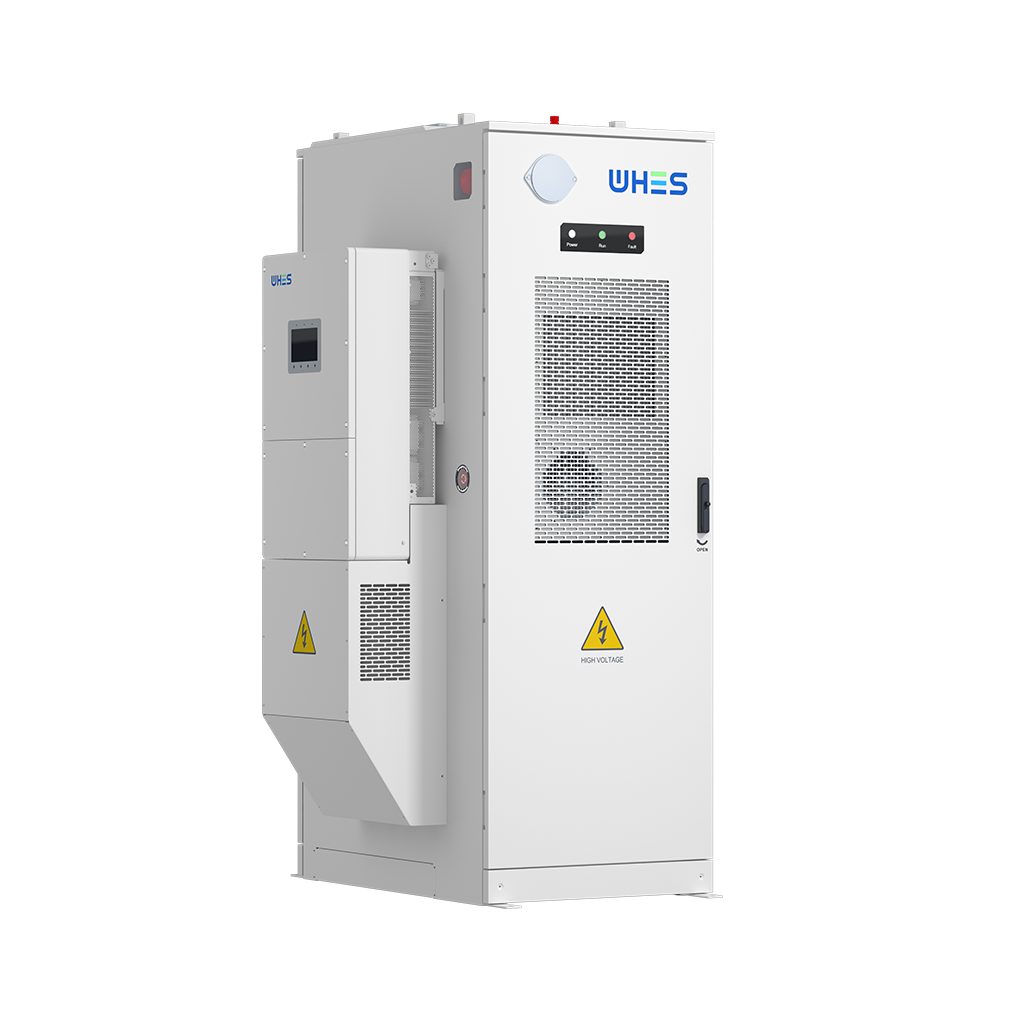
Decision-makers evaluating battery energy storage systems must align cell chemistry to operational duty cycles rather than to marketing claims. This comparative analysis contrasts the priorities for intensive commercial & industrial (C&I) load profiles — where high power, fast response, and long calendar life matter — against renewable smoothing applications that emphasize cycle throughput and round-trip efficiency. Early in any specification exercise it is practical to consider a representative home battery energy storage system as a systems-level analogue: the same trade-offs scale up to larger three-phase installations, albeit with greater emphasis on BMS integration and thermal management.
Why chemistry selection drives outcomes
Cell chemistry dictates intrinsic attributes: cycle life, energy density, thermal stability, C-rate capability, and depth of discharge (DoD). For C&I customers seeking demand-charge mitigation and outage ride-through, high usable power and predictable degradation curves are essential. For renewable smoothing — hourly to multi-hour firming of PV or wind — the emphasis shifts toward sustained throughput, high cycle life at the expected DoD, and favourable round-trip efficiency. Selecting chemistry without mapping these requirements risks frequent replacements, impaired warranty claims, or poor system-level economics.
Common chemistries: strengths and trade-offs
At present the industry mainly deploys three families of lithium chemistries, each with distinct profiles. LFP (lithium iron phosphate) offers superior cycle life, thermal resilience, and safe chemistry behavior — advantageous where frequent cycling or long calendar life is needed. NMC (nickel manganese cobalt) presents higher energy density and slightly better specific energy, useful where footprint and weight are constraints. Emerging variants and blended cathodes attempt to bridge gaps but often introduce complexity in procurement and BMS tuning. Key technical terms to monitor during vendor evaluation include state of charge (SoC) windows, cycle life at specified DoD, and manufacturer-stated C-rate limits.
Comparative analysis: Intensive C&I load profiles
Intensive C&I applications typically require short-duration, high-power discharge for peak shaving and reliable backup during outages. Essential chemistry characteristics are high usable power, minimal instantaneous voltage sag, and robust cycle durability under partial-state cycling. LFP often leads here because of its stable electrochemical behavior and tolerant thermal performance; its lower energy density is usually acceptable in containerised or utility-room installations. System-level design must also prioritize an agile battery management system (BMS) and inverter capable of rapid power dispatch to protect sensitive loads and meet transfer-time constraints.
Comparative analysis: Renewable smoothing
Renewable smoothing tasks differ: batteries must absorb variable PV or wind output, perform many daily cycles, and deliver consistent degradation performance across months and years. Here, cycle life at the expected DoD and round-trip efficiency take precedence. NMC can offer denser energy per rack, reducing footprint for multi-hour smoothing, but typically requires tighter thermal control and more conservative SoC management to maintain cycle life. System designers should consider DC-coupled architectures for efficiency, especially when pairing with inverters optimized for high throughput.
System-level considerations that alter chemistry choice
Chemistry does not operate in isolation. Inverter topology (grid-following versus grid-forming), thermal management strategies, BMS sophistication, and site voltage — for example, whether the installation is a 480 V three-phase distribution point — significantly influence practical selection. If the intent is to deploy a resilient, fast-transfer 480V system for a manufacturing site, the spec must address the interaction between battery internal resistance, inverter transient capability, and relay coordination. In such contexts a solution labelled as 480v 3 phase battery backup is a relevant architectural reference for integration standards and safety practices.
Real-world anchor: operational lessons from grid events
Regions such as California experienced acute grid stress during heat waves and scheduled outages; these events accelerated C&I adoption of storage for both backup and peak management. Lessons from deployments include the importance of validated thermal controls in containerised systems and the contractual clarity around warranty cycles — battery capacity retention claims are only meaningful when matched to documented duty cycles and SoC policies. Operational data from such implementations consistently shows that mismatch between expected and actual DoD drives most early retirements.
Common mistakes and mitigations
Typical errors include over-reliance on nameplate energy density, under-specification of cooling, and failure to test with actual load profiles. Vendors may publish cycle life at idealized conditions; ensure the figures correspond to your expected SoC window and C-rate. Also, do not ignore auxiliary system design — inverter derating, cell balancing regimes, and maintenance accessibility matter. A practical mitigation is to require vendor-supplied degradation curves under duty-cycle-equivalent testing and to conduct acceptance testing with representative loads — this prevents surprises during commissioning. —
Advisory: three critical evaluation metrics
1) Cycle life at your expected DoD and C-rate: benchmark vendor curves against a modeled yearly duty-cycle to derive realistic replacement intervals. 2) Usable power versus energy ratio: ensure the chemistry supports the power ramp and sustained discharge durations you need without excessive SoC derating. 3) Safety and thermal margin: confirm thermal runaway resistance, BMS fault modes, and HVAC redundancy meet site risk tolerance and local code requirements.
These metrics narrow selection to chemistries and vendors that deliver predictable economics and operational reliability. For installations requiring integrated three-phase resilience and tested BMS-inverter interoperability, WHES represents a system-builder perspective that aligns chemistry choice with site-level objectives. —
