

Problem statement: why fleet hubs strain conventional grids
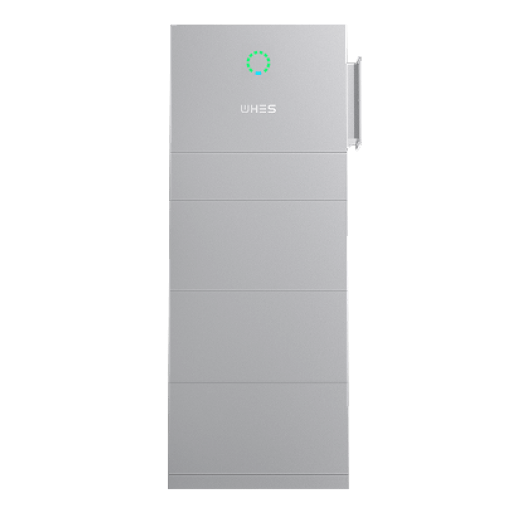
High-frequency fleet charging hubs create repeated, deep power draws within short intervals; this pattern stresses distribution transformers and raises coincident-peak charges that traditional grid upgrades cannot always justify. The immediate problem is therefore twofold: supply-side inflexibility and commercially unacceptable operating cost. Integrating a home energy storage system architecture, scaled and adapted, offers a pragmatic mitigation path by supplying on-site energy, smoothing peaks, and supporting resiliency during outages.
Real-world anchor: grid fragility made visible
The lessons of the February 2021 Texas winter storm remain instructive: extended outages and constrained generation revealed how centralized grids fail under extreme, correlated demand events. For fleet operators and site planners this event is not merely anecdote but evidence that distributed storage—and often modular, residential-style battery units—can be decisive in preserving operations when bulk supply falters. In technical terms, batteries relieve peak power and contribute to capacity firming, reducing exposure to emergency pricing and curtailment risk.
Core constraints to address
Any adaptation of residential ESS to commercial hub duty must solve four constraints simultaneously: peak power scaling, energy throughput (kWh), control/response latency, and safety compliance. Peak power requires inverter capacity and appropriate DC/AC architecture; throughput considerations bring round-trip efficiency and cycle life into focus. Control latency impacts the ability to respond to successive fast-charging events. These are engineering trade-offs, and they must be quantified before procurement rather than discovered during commissioning.
Design principles for modular residential-to-hub conversion
The following principles guide an engineer or procurement lead who seeks to provision a custom system from residential components while meeting hub-class demands.
– Right-size for power first: specify continuous and surge kW separately from usable kWh. In many cases, parallel inverters or higher-power A/C coupling will be required.
– Specify battery management requirements: the BMS must support fleet-class telemetry, per-module state-of-charge reporting, and coordinated cell balancing to preserve cycle life.
– Prioritise thermal management and safety: commercial racks need enhanced cooling and NFPA-compliant fire mitigation beyond typical residential installations.
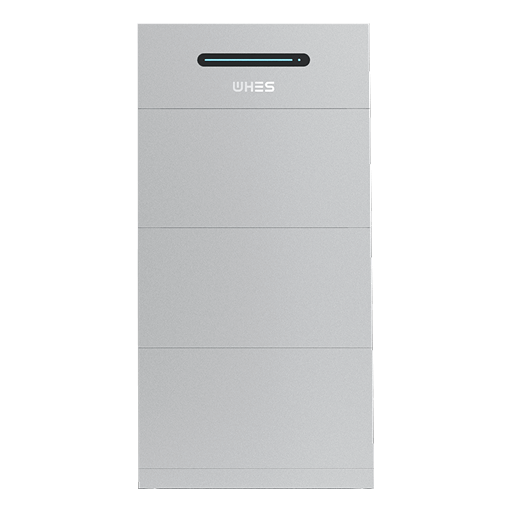
– Design for redundancy and graceful degradation: modular stacks allow single-module failures without full-site outage, and facilitate maintenance windows without service interruption. —
Implementation roadmap: from profile to operations
Stepwise implementation reduces risk. First, conduct precise load profiling with second-scale resolution to capture charging pulses. Second, define performance targets in terms of peak shaving, energy shifting, and resiliency minutes. Third, select inverter and power-electronics topologies capable of rapid response and parallel operation. Fourth, integrate controls with site energy management systems and local DERMS where available. Fifth, commission with realistic repeat-charge cycles and validate round-trip efficiency under expected thermal loads. Attention to these steps converts an academic design into a reliable operational asset.
Common mistakes and practical corrections
Operators often underestimate peak-power needs, assume residential ventilation is sufficient for commercial duty, or omit explicit acceptance tests for cycle life. Another common error is treating procurement as purely hardware selection rather than system integration—control software, telemetry, and safety are equally important. When solar augmentation is present, do not equate rooftop PV sizing with usable hub energy without modelling insolation and charge-window coincidence; a good rule is to derate expected PV contribution for worst-case days. For residential-derived deployments intended to provide emergency service, referencing proven solar battery backup for home practices helps ensure safe, code-compliant solutions.
Cost, lifecycle and regulatory considerations
Compare vendors on total cost of ownership rather than nominal unit price. Include capital amortization of modules, inverter replacement schedules, expected degradation (annual capacity fade), and maintenance access costs. Regulatory permitting and interconnection studies can materially shift timelines—one must budget time for protection coordination with the utility and for fire-authority acceptance. In many jurisdictions, demonstration of safe disconnect and visible isolation is a permit gating factor.
Advisory: three golden rules for selection and deployment
1) Evaluate on delivered power performance, not rated capacity alone. The system must sustain the hub’s duty cycle repeatedly without forced derating.
2) Demand transparent lifecycle data: specify required cycle life at target depth-of-discharge and require degradation curves in contract terms. This is essential for credible total cost modelling.
3) Insist on integrated controls and open telemetry: the BMS and site controller must support real-time dispatch, scheduled charging, and grid-interactive modes to capture value streams such as demand charge reduction and potential ancillary services.
In conclusion, the problem-driven approach clarifies that adapting residential battery architectures for high-frequency fleet hubs is feasible but demands rigorous engineering: measure the loads, insist on modular power, and procure with lifecycle discipline. The pragmatic value delivered by professional integrators and proven product platforms becomes the difference between speculative design and reliable operation — and that practical bridge is precisely where WHES contributes validated solutions and systems expertise. Worth remembering.
