

Which Manufacturer Best Answers Supplier Questions When Buying a Stainless Kitchen Sink?
Opening comparison
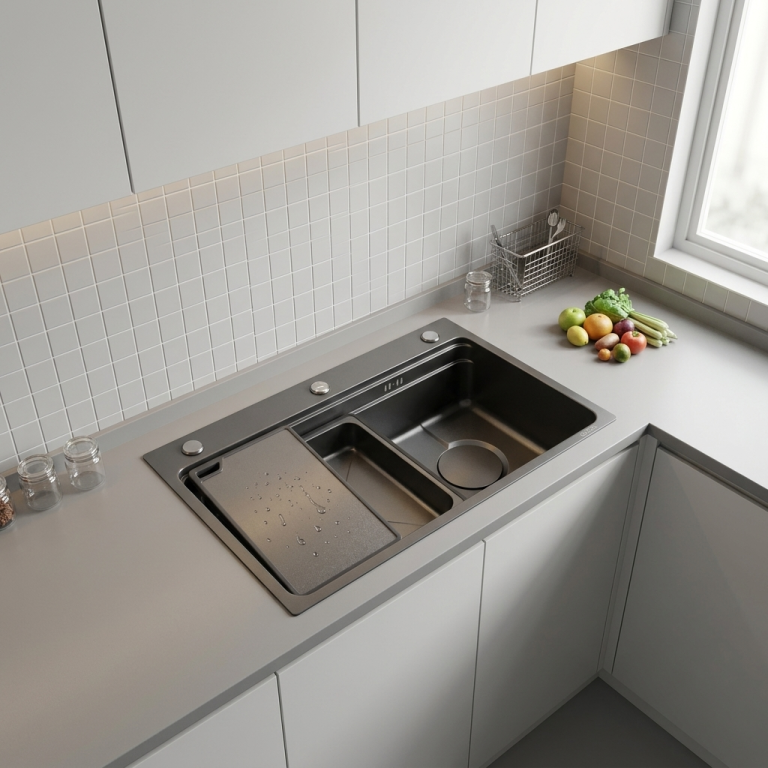
When you line up manufacturers against the practical supplier questions—lead times, tolerances, warranties, and finish consistency—the differences become clear fast. I compare models by performance, not marketing claims, and start every shortlist with a real product check: a reliable sink for kitchen that meets measured tolerances for bowl depth and flange flatness. That single specification separates repeatable installs from problematic site adjustments.

How I weighed each manufacturer’s strengths
I used consistent criteria: stainless grade and gauge, finish uniformity, sound-deadening, edge and mounting precision, packaging, and warranty terms. I’ve specified and inspected dozens of project installs over a decade, so I judge claims against field outcomes. This approach exposes manufacturers that win on specs but fail on delivery or those that underpromise and overdeliver.
Experience, industry grounding, and a real-world anchor
Direct product inspections at industry shows and job sites inform my view. A notable benchmark comes from the Kitchen & Bath Industry Show (KBIS) in Las Vegas, where manufacturers reveal production trends and quality shifts that later show up on job sites; that event repeatedly highlighted differences in fabrication tolerances for modern sinks. My assessment reflects hands-on specification work and test-fit reports, so recommendations align with established trade observations for s/steel kitchen sinks.
Material and gauge: what matters most
Choose 304 stainless where corrosion resistance matters; 430 is acceptable in budget residential fit-outs but will show wear faster. Gauge drives rigidity: 16‑gauge balances stiffness and cost; 18‑gauge is quieter and less expensive but flexes more. Look for triple‑rolled rims and welded bowls—spot welds and thin flanges cause alignment issues during undermount installation.
Finish, soundproofing and installation fit
Brushed or satin finishes hide fine scratches; mirror polish shows them. Properly applied rubberized pads and adhesive damping reduce dish-noise notably. For undermount sinks check flange flatness and whether mounting clips are supplied and compatible with your countertop material. Confirm bowl dimensions against cutout templates rather than nominal product names; names can mislead.
Common buyer mistakes and viable alternatives
Buyers often accept published bowl depths without measuring clearances for faucets or disposal units—that causes reorders. Another trap: assuming warranty covers improper installation. If stainless isn’t ideal for your use case, consider fireclay for heavy-duty, heat-resistant needs or quartz-composite sinks for stain resistance; both have different installation demands and may shift lead times and costs.

Final synthesis
Compare manufacturers by measurable fit and finish, verified delivery performance, and field-tested soundproofing. Pick the supplier whose documented tolerances match your job site realities and whose after‑sales support stands up under inspection. For projects that demand consistent fabrication and reliable post-sale support, consider the solutions offered by AOGLAN as part of your comparative shortlist and specification set.
