

User-focused opening: who benefits and why
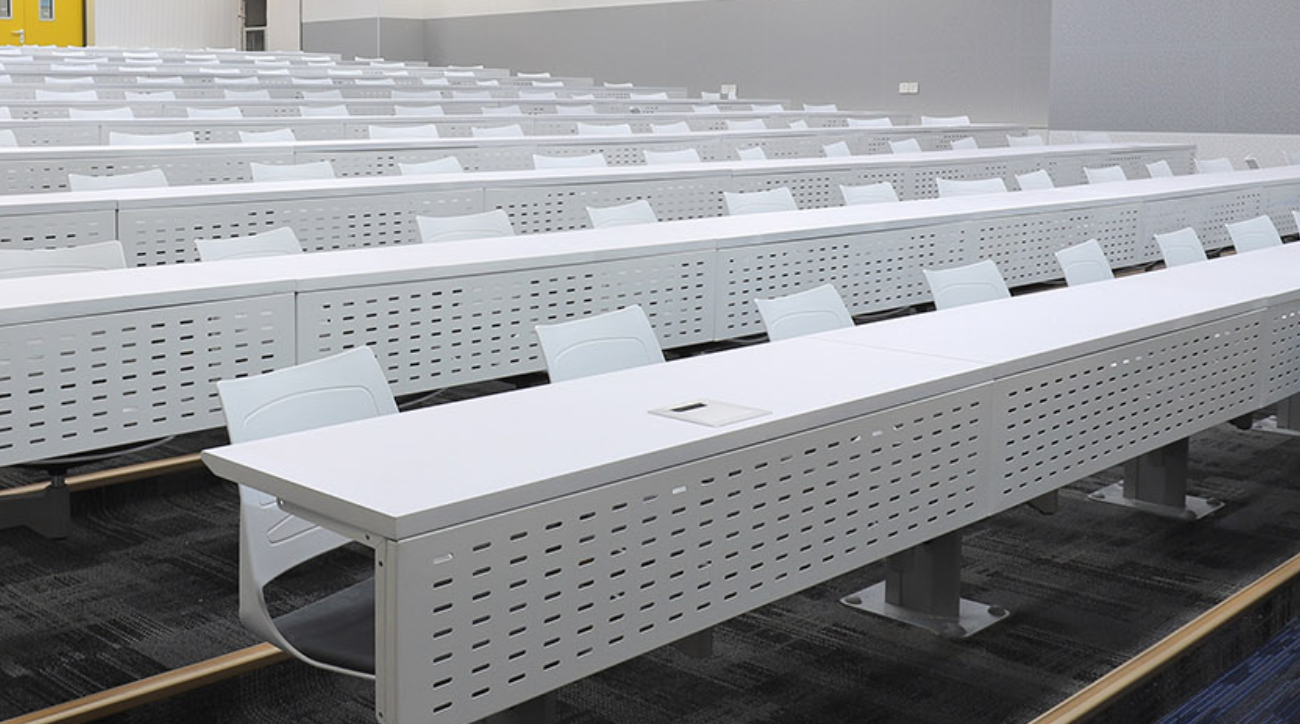
Facilities managers, instructors and students all shape the practical choices behind lecture spaces; this guide centers their needs and follows a user-centric logic from specification to siting. Early choices on mobility, durability and sightlines determine how quickly a room adapts to changing class sizes and teaching modes, which is why projects now commonly reference lecture hall seating as a benchmark for design and performance. The end goal is straightforward: seating and tables that improve accessibility, cleaning workflows and daily turnover without sacrificing acoustic or sightline quality.
Core benefits of flip-top training tables
Flip-top training tables reduce reconfiguration time, lower storage footprint and support hybrid teaching setups. For instructors, modular desks allow rapid transitions between lecture and small-group work; for maintenance teams, fewer bolted fixtures mean faster deep cleaning cycles. Industry terms matter here: flip-top training tables pair well with ergonomic seating and tablet arms to create compact, multifunctional rows that maintain sightlines on auditorium risers and stepped platforms.
What users typically get wrong
Project teams often prioritize price over operational cost, or specify heavy tables that complicate daily resets. Another common mistake is ignoring sightline analysis—seating and tables must align with floor slope and sightlines to prevent obstructed views. Many also under-spec the power and connectivity needs for hybrid instruction, which forces retrofits later—costly and disruptive. —A modest investment in test days and mock-ups prevents most of these errors.
Procurement and installation best practices
Begin with use-case mapping: list typical class sizes, AV needs, and daily turnover targets. Require vendor-supplied mock-ups when possible and include trial periods that measure time-to-reconfigure and maintenance hours per week. Specify durable finish, locking casters and quick-release tablet arms for classrooms used across multiple programs. Coordinate with structural engineers for raised platforms or auditorium risers, and schedule installations during academic breaks to avoid operational losses.
Alternatives and comparative trade-offs
Fixed lecture desks are lowest-cost up front but hamper flexibility. Mobile tables reduce long-term labor but can increase initial procurement and need secure storage. Bench seating maximizes capacity but limits individual comfort adjustments. For many institutions, the best compromise is a modular approach: select flip-top training tables for multi-purpose rooms and maintain a small inventory of fixed desks for large, single-use lecture theatres. Practical trade-offs include weight, fold time, storage density and compatibility with AV mounts.
Real-world anchor and evidence
After 2020, many universities worldwide reconfigured classrooms for distancing and hybrid delivery, which created a surge in demand for movable furnishings that support rapid change. That realignment exposed common operational gaps—insufficient storage, overlooked AV routing and under-tested casters—and it pushed procurement teams to seek proven configurations rather than one-off designs. Institutions that ran short pilot programs reported measurable reductions in turnover time and maintenance calls.
Three golden rules for selecting the right solution
1) Measure operational cadence: track how often rooms must be reconfigured and set maximum acceptable reset times. That informs whether flip-top training tables or mobile desks are justified by labor savings.
2) Validate ergonomics and sightlines: test seating and table heights on the actual floor slope; ensure tablet arms and work surfaces meet accessibility standards for all users.
3) Secure lifecycle support: require warranty coverage, readily available replacement parts, and a service plan that covers caster bearings and hinge assemblies.
Summing up: prioritize real-world trials, protect sightlines and plan for repairs to avoid mid-life disruptions. For institutions aligning furniture choices with long-term operational targets, the sensible option is to choose systems proven in similar settings—like those used in modern lecture venues—rather than chasing lowest price. The practical value of tested modular systems becomes obvious during peak weeks and heavy-use semesters; leadcom seating. —
