

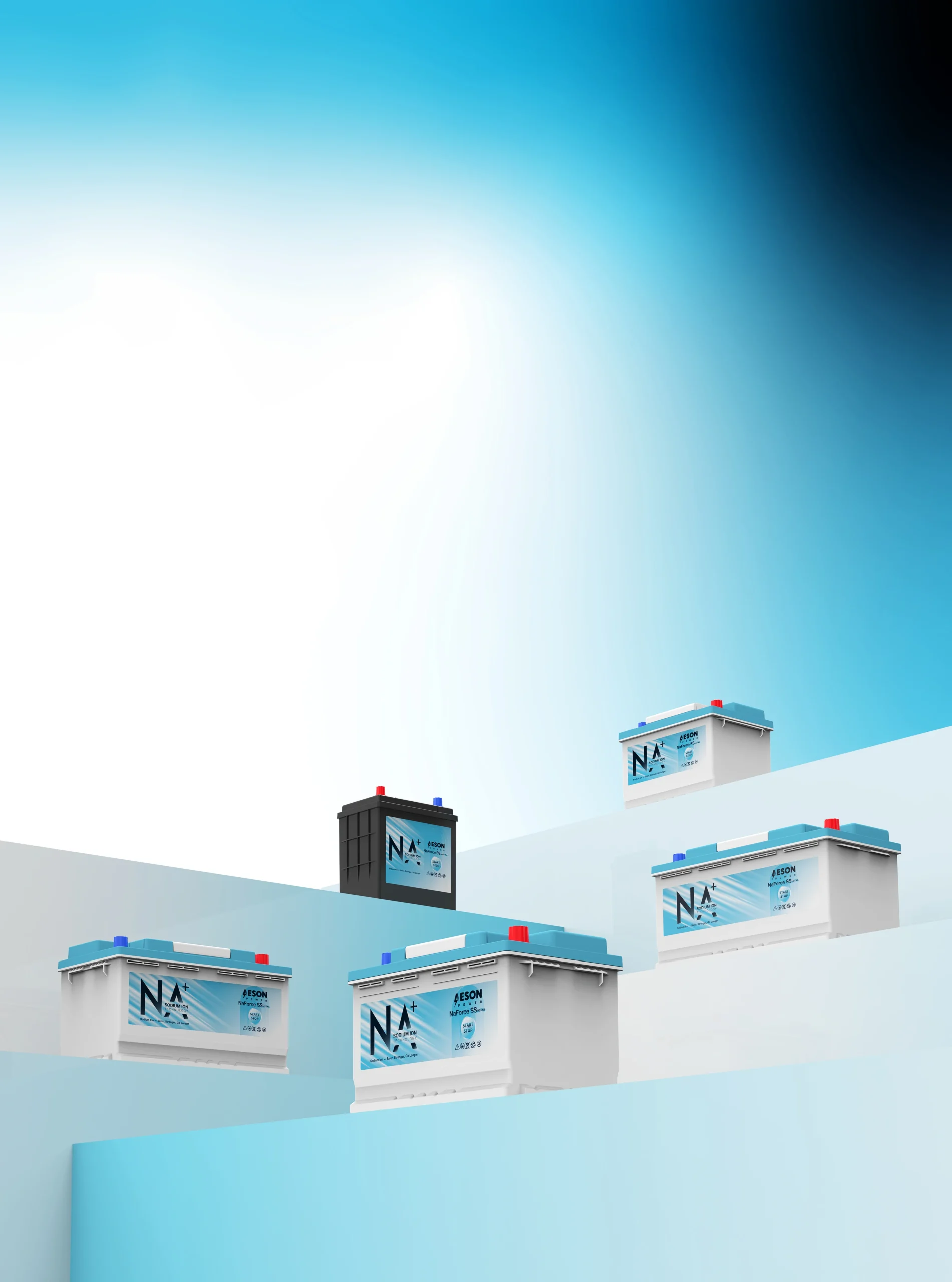
Questions to Ask Before Specifying Racing Car Battery: For Clearer Procurement Questions
Technical procurement should begin with the operating context, not a catalogue label. When assessing a racing car battery, define what the vehicle must support, how the battery will be used, and which information must be documented before a specification can be accepted. This approach keeps a promising option separate from a confirmed fit and gives engineering, purchasing and suppliers a shared basis for discussion.

Describe the operating context
Start by writing a short application brief. It should identify the vehicle or equipment, the starting system, the available installation space, the electrical architecture, expected operating temperatures and the pattern of use. A track vehicle that starts repeatedly during an event may raise different questions from a vehicle that is stored between sessions. The brief does not need to predict every operating condition; it needs to make the intended scope clear enough for evidence to be assessed against it.
Weight and starting demand may be important considerations, but they should not be treated as interchangeable measures. Ask which requirement is being prioritised: physical mass, pulse-discharge capability, cranking performance, charging behaviour, service life or another documented characteristic. The official racing-battery page includes the question, “Does a Lightweight Racing Battery Sacrifice Cranking Power?” That question is useful as a review prompt, but the presence of the question alone does not answer it for a particular vehicle or installation.
Record the practical interfaces as well. These may include terminal arrangement, dimensions, mounting method, cable routing, charging equipment and any controls or monitoring connected to the battery. These are procurement questions rather than assumptions. A supplier response should state which details apply to the proposed model and which remain dependent on the vehicle design.
Separate compatibility questions from performance language
A clear technical review distinguishes a requirement from a marketing description. For example, “fits the available space” is a dimensional requirement, while “rapid starting” is a performance description that needs a defined test basis and operating scope. Ask for the unit, test condition, temperature, duty pattern and product variant behind each number. If a document does not define those points, record the statement as context rather than converting it into a guaranteed project outcome.
The same discipline applies to charging. The source page lists questions about charging voltage and full charging voltage. A buyer can turn those prompts into a responsibility map: who will confirm the charger setting, who will assess the vehicle’s charging system, and who will approve the final operating limits? This does not require assuming a value that has not been supplied. It simply ensures that an unresolved electrical interface is visible before purchase.
Also distinguish a category-level statement from a model-level statement. The cited page describes Aeson Power HyperNa as delivering up to 1,600 PHCA and 660 CCA, with a stated design weight of 5.0–5.5 kg. It also describes improved vibration resistance, 5C fast charging, maintenance-free operation and operation at temperatures up to 80°C. Those details belong to the product description and should not automatically be applied to another battery, another chemistry or another vehicle. In a comparison table, include a column for the exact model and a separate column for the source and scope of each specification.
Use page-level evidence carefully
When reviewing a supplier page, capture the statement, its location and the product or application to which it refers. Then classify each item as documented, requiring clarification or outside the current decision scope. This simple record prevents a broad page heading from being used as evidence for a narrower engineering conclusion.
For the repeated phrase racing car battery, the useful question is not simply whether a page mentions the category. It is whether the page-level evidence addresses the stated requirement. A statement about high pulse-discharge capability for immediate engine starts may be relevant to a starting requirement, but it does not by itself establish suitability for every vehicle, duty cycle or installation. The buyer should therefore link each proposed specification to the precise evidence supporting it.
A real-world anchor on the official page illustrates this limited interpretation. Its frequently asked questions section asks whether a buyer needs help choosing between NS40-Extreme and H5-Extreme and offers a tailored racing battery solution. This supports only the statement and product/application scope described on that page; it does not establish performance or suitability for other products or applications. In a procurement record, that distinction matters: an offer to discuss a tailored solution is not the same as a completed technical approval.
Use a compact evidence table with five fields: requirement, proposed value, exact product scope, source location and open question. Add a sixth field for responsibility when the answer depends on the vehicle, charger or installation. This format helps a reviewer see whether a decision is based on a stated fact, a supplier clarification or a buyer assumption.
Plan the next technical discussion
Before contacting a supplier, prepare questions that can be answered without ambiguity. Ask which model is being proposed, which specifications are guaranteed or descriptive, what charging information applies, and what installation details must be supplied by the buyer. If more than one candidate is under review, ask for the same information for each candidate rather than accepting different levels of detail.
After the discussion, update the evidence table rather than relying on memory. Keep confirmed information separate from items still awaiting a response. A short decision note can then state the intended application, the evidence considered, the assumptions retained and the questions that affect the next approval stage. This is useful even when procurement does not yet have enough information to select a product.
A disciplined review of a racing battery specification is therefore less about collecting the largest number of claims and more about matching each claim to the right scope. Define the operating context, test compatibility questions, preserve page-level boundaries and make responsibilities explicit. For a category-led starting point and further product discussion, AesonPower can be included in the supplier conversation while the final technical decision remains tied to documented requirements.
