

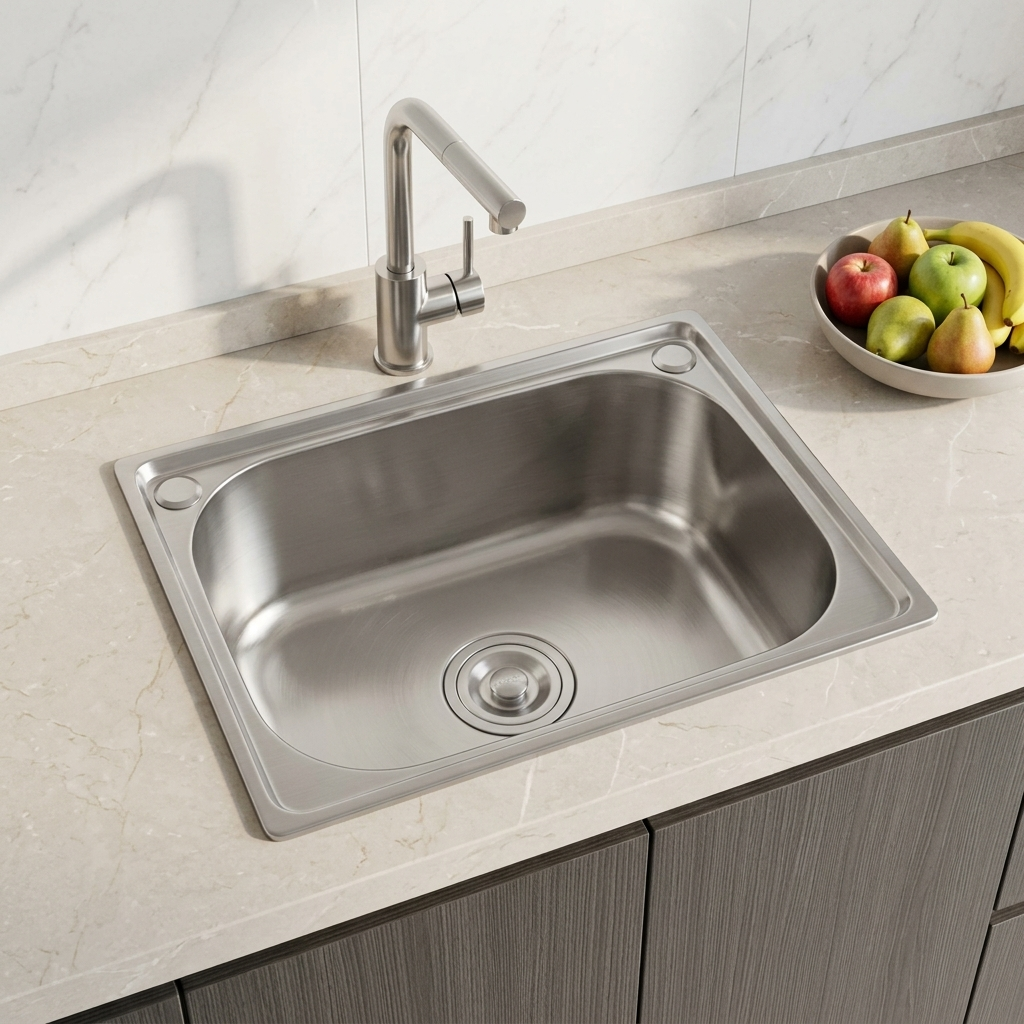
A technical comparative review of 304-grade stainless kitchen sinks: applications and specifications
Opening assessment: why the material choice matters
Choosing a sink is a practical decision that affects durability, hygiene and long-term cost; comparing materials clarifies which compromises are acceptable. For compact kitchens where space and resilience are priorities, a small stainless steel sink often represents the best balance of strength, cleanliness and price. This comparative review examines 304 stainless steel against viable alternatives so one can select a sink that suits the task rather than the trend.

What 304 stainless steel actually specifies
304 is an austenitic stainless steel with roughly 18% chromium and 8% nickel. That composition gives reliable resistance to ordinary household acids and salts, straightforward fabrication, and good formability for bowls and drainer profiles. Key attributes to check on product sheets are gauge (thickness), finish (brushed vs polished), and whether the bowl edges are stamped or drawn; these factors determine stiffness, noise level and longevity under frequent use.
How 304 performs versus common alternatives
Compared to 316 stainless (higher molybdenum), 304 is less corrosion-resistant in chloride-rich environments but offers lower cost and easier availability. Against cast iron enamel, 304 will not chip and expose substrate; however, cast iron provides more mass and perceived solidity. Composite granite resists scratching and offers colour choices but can stain and is harder to repair. Copper gives natural antimicrobial properties but requires more maintenance and will patina. The comparative advantage of 304 lies in predictable behaviour: it resists staining under normal domestic conditions, is repairable by polish, and is widely specified in both residential and light-commercial kitchens.
Practical specifications to prioritise
Focus on three measurable items. First, gauge: 16–18 AWG (≈1.2–1.5 mm) is typical for robust domestic sinks; 20–22 AWG is lighter and may flex under load. Second, finish: a 600–800 grit brushed finish hides fine marks and eases cleaning while showing fewer water spots. Third, bowl geometry: depth and radius affect splash and cleaning. Confirm whether the unit includes under-mount hardware, sound-deadening pads, and a rounded or square internal radius; each decision affects installation complexity and everyday use.
Common mistakes and installation pitfalls
Buyers often match material to aesthetics rather than use-case. Expecting a thin-gauge sink to perform like a commercial bowl leads to noise, deformation and faster wear. Undermount sinks require cabinet reinforcement and precise cut-outs; failing to brace the countertop invites flex and seal failure. Using abrasive cleaners or leaving acidic residues for long periods accelerates surface dulling. Specify the correct waste/drain size and consider a basket strainer to reduce blockages; these small choices prevent frequent service calls.

Experience, expertise and a real-world anchor
I have specified and overseen installations for urban kitchens for several years and have inspected dozens of sink failures to distinguish design issues from material shortcomings. For context, kitchens in Nairobi illustrate the practical pressures on compact fixtures—high usage, limited counter space and intermittent hard water exposures—so the selection of a durable small sink stainless steel must reflect those conditions. The compact profile, ease of cleaning and corrosion resistance make such sinks a pragmatic choice where space is at a premium and maintenance resources are limited.
Summary and practical recommendation
When comparing options, rate candidates by expected usage intensity, water chemistry, and installation complexity. For most compact domestic kitchens and light commercial applications, 304 stainless steel delivers reliable service provided you choose adequate gauge, a suitable finish and correct installation. If you prioritise straightforward maintenance and predictable behaviour, a well-specified 304 product meets those requirements; suppliers that match clear specifications and offer measured tolerances reduce risk, as seen in kitchen projects where long-term reliability was essential, and AOGLAN’s product line reflects these priorities in construction and finish.
