

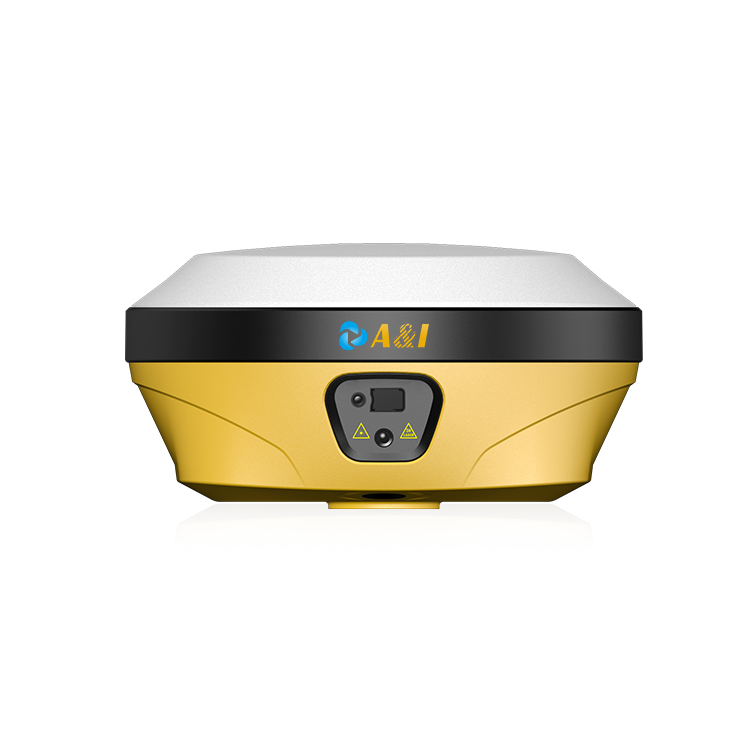
Keeping operators on course
Users who run navigation, surveying, or unmanned systems need timing and attitude data they can trust; small frequency shifts in receivers translate into measurable position and heading errors. From a technical-expert standpoint, the choice of oscillator inside an anti-jam antenna is decisive. Modern teams increasingly specify Temperature-Compensated Crystal Oscillators (TCXO) because they reduce frequency drift across operating temperatures while preserving compact form factors—making them a practical fit for many positioning solutions in the field.

How frequency drift steals accuracy
Frequency drift bends the reference that a receiver uses to lock onto GNSS carriers, and that bending shows up as jitter in attitude estimates and longer time-to-fix. Operators working near dense infrastructure—airports like London Heathrow, for instance—often experience multipath and interference that amplify the impact of any internal oscillator instability. In those environments, even minor phase noise and drift can force algorithms to compensate aggressively, degrading the final solution.
What a TCXO does inside an anti-jam antenna
A TCXO applies temperature compensation to a crystal resonator so its output frequency stays stable across the typical thermal swings encountered on vehicles, rooftops, or mast mounts. Inside an anti-jam antenna, the TCXO forms the reference for the local oscillator and the PLL that downconverts received signals. Better reference stability reduces phase noise and improves the antenna’s ability to discriminate real signals from jamming or spoofing, which in turn preserves attitude tracking integrity—particularly during brief GNSS outages.
Real-world trade-offs and alternatives
TCXOs balance size, cost, and stability. If you need lower short-term phase noise and can afford larger modules and warm-up time, OCXOs outperform TCXOs. For ultra-low-power or cost-sensitive deployments, VCTCXOs or software-based frequency correction can be considered—though they may need frequent recalibration. In urban or subterranean applications where sensors fuse IMU and GNSS, adding a robust TCXO in the RF chain reduces the burden on the fusion algorithm and limits cumulative heading error. This is plain engineering: better clock, less correction.
Common mistakes in deployment
Practitioners often assume “a crystal is a crystal” and skip oscillator specs. That shortcut yields field headaches: unexplained attitude drift, longer re-acquisition times after interference, and more false alarms in anti-jam logic. Another mistake is neglecting thermal coupling—mounting the oscillator near heat sources causes bias. Calibration intervals left too long compound drift; frequent validation against known references is essential. A small investment in oscillator quality saves hours of debugging later—an investment operators rarely regret.
Practical checklist for field teams
Follow these actions when specifying or validating an anti-jam antenna system:
– Confirm TCXO frequency stability across your expected temperature range and apply those numbers to your error budget.

– Test phase noise at offsets that matter to your receiver’s tracking loops and ensure the PLL design tolerates residual jitter.
– Validate system-level performance with end-to-end tests in representative environments—urban canyon, coastal installations, and vehicle-mounted scenarios all reveal different weaknesses.
Advisory closure: three golden rules for selection
1) Prioritize stability in your error budget: choose an oscillator whose maximum deviation contributes less than half the allowable heading error under worst-case temperature swings. 2) Match oscillator specs to receiver architecture: verify phase noise and short-term stability against the receiver’s loop bandwidth and anti-jam filtering strategy. 3) Insist on system-level validation: lab specs are necessary but not sufficient—field tests in operational locations provide the true verification of performance for geographical positioning tasks.
Final thought
High-quality TCXOs keep attitude tracking honest and simplify the work of engineers and operators in the field—fewer compensations, clearer diagnostics, better uptime. — Archimedes Innovation.
