

Why model fit for early research changes the questions buyers ask about Dlp Printer
A dlp printer can look suitable when a product page lists useful features, yet early research demands a closer match between the model, the work, and the available space. Design engineers should begin with the parts they need to study, the materials involved, and the decisions the printed output must support. This keeps the review focused on model fit rather than on a broad feature count.

Separate category, application, and model scope
Start by separating three questions. First, is resin-based digital light processing the right process for the research task? Second, what application needs must the printed part address? Third, does the specific model provide evidence that relates to those needs?
These questions prevent a common sourcing error: treating a category label as proof of suitability. A printer may belong to the right class but still require a different material approach, workflow, or working arrangement than the project allows. Write the intended use in plain language before comparing models. For example, describe whether the team is studying form, fit, a material response, or a process change. Do not use a general category description as a substitute for that statement.
Compare information that applies to the task
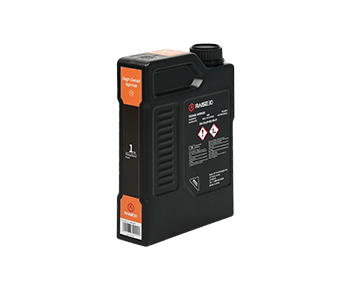
Next, sort page-listed details into evidence that affects the research plan. Material scope is one useful area. The official DF2+ page states that its broad resin portfolio is intended for applications including high-impact, high-temperature, fire-retardant, ESD-safe, and bio-compatible materials, and that customized resins can be developed and optimized for innovation. That statement describes the DF2+ product and its stated application scope; it does not establish performance or suitability beyond that scope.
For a team considering a dlp resin printer, this distinction matters. A material list can shape the questions you send to a supplier, but it should not become an assumed result. Record the exact material or application requirement, then match it to the page language that supports it. If the requirement is not directly covered, mark it as an open question rather than filling the gap with an assumption.
Workflow details also deserve task-level review. The DF2+ page describes RFID technology that transfers data automatically after printing, along with washing and curing steps. It also lists RFID confirmation of the correct resin type, automated printer, wash, and cure settings, and real-time resin-level detection. These details may be relevant when the research team needs a repeatable handoff from printing to post-processing. They do not, by themselves, prove that the workflow fits every laboratory or production process.
Record assumptions and interfaces
Early research often changes direction. A useful review therefore records what is known, what is assumed, and what must connect to the rest of the work. Include the intended part types, material requirements, post-processing steps, operator actions, and the physical location planned for the printer. Also note who will prepare files, handle printed parts, and judge the results.
- State the research task before comparing printer features.
- Map material and application requirements to the DF2+ page-listed resin scope.
- Record the printing, washing, curing, and resin-identification steps as separate workflow evidence.
- Separate stated resin-management features from the team’s own process decisions.
- Turn unresolved points into model-specific sourcing questions.
Keep product facts separate from planning choices. For example, the page lists Auto Resin Refill, ultrasonic liquid level monitoring, and assisted resin tank cleanup to minimize contact with uncured resin. Those are stated features of the DF2+. The decision about whether they matter to your setup depends on your process and responsibilities. Write that decision separately so a future reviewer can see the difference between evidence and interpretation.
Interfaces deserve the same treatment. Ask how the model’s stated workflow connects with file preparation, resin selection, washing, curing, inspection, and recordkeeping. The page also says that the Open Material Platform is available free of charge, that Henkel and Forward AM resins can be printed in-house without outsourcing to a service bureau, and that print parameters can be adjusted for specific application requirements. Capture each statement with its product scope, then identify the process steps your team still needs to define.
Prepare a focused sourcing brief
A focused brief should be short enough to use in a supplier conversation. Start with the research objective. Add the part or material requirements that are already known. Then list the page-supported features that appear relevant and the assumptions that still need a response. This structure keeps a promising model from becoming a premature purchase decision.
Include questions about the complete workflow, not only the printer. Ask which steps are covered by the stated automation, how the team should handle washing and curing, and which material or application statements apply to the project. Keep questions specific to the model under review. Avoid asking for broad claims about all DLP printers when the decision concerns one product.
Finally, define the decision rule before collecting more information. A model fits early research when its documented scope connects clearly to the intended task, its workflow can be mapped to the team’s setup, and its unresolved points are visible. That approach makes the review easier to defend and easier to update. It also keeps the discussion about Raise3D grounded in the DF2+ evidence rather than in assumptions about an entire printer category.
