

Straight talk up front
I’m laying out a clear comparison between sub-6GHz and mmWave beamforming for fixed wireless access (FWA) on industrial following robots, no fluff. For a practical module you can drop into a control stack, check this LTE Module — it sits well where reliability matters. This write-up walks through throughput, range, antenna work, power, and real-life fit for factory floors so an engineer or plant manager can pick a winner for their use case.
Use-case first: what these robots need
Following robots demand steady uplink and downlink for video, telemetry, and low-latency control. They need predictable throughput during turns, in aisles, and near metal racks. Latency under 20–50 ms and sustained throughput in the tens to hundreds of Mbps are common targets depending on whether you’re streaming high-res camera feeds or just sensor packets. Beamforming and MIMO can help get those numbers, but the band choice sets the baseline.
Throughput and latency: mmWave vs sub-6GHz
mmWave wins raw bandwidth. It can push hundreds of Mbps to gigabit rates in short hops with tight beamforming, which is great for multi-camera streams. But mmWave links are brittle around obstacles and body blocks from workers. Sub-6GHz gives lower peak throughput but better penetration and smoother latency in cluttered halls. For a following robot that rounds pallets and squeezes through aisles, stability often matters more than peak speed—unless your camera suite absolutely requires mmWave-level bandwidth.
Range, propagation, and antenna work
Sub-6GHz travels farther and through metal better. Antenna designs are simpler; you get wider beams that tolerate small misalignments. mmWave relies on narrow beams and precise beam steering; you’ll need phased arrays and continuous tracking. That raises mechanical and software complexity. If your layout includes long straight runs and clear LOS between base radios on ceiling trusses and robots, mmWave is usable. If aisles, racks, and human traffic dominate, sub-6GHz is a safer bet.
Power, size, and thermal realities
mmWave radios and arrays eat power and generate heat. On a battery-powered following robot, that shortens run time or forces heavier batteries. Sub-6GHz modules are leaner, which fits compact platforms. Also, thermal throttling on mmWave modules can degrade throughput during long shifts. These are engineering realities you can’t paper over with optimization alone.
Deployment, integration, and a real-world anchor
Look at smart grid rollouts where 4G modules handled meter backhaul in places like California and the UK; they taught many engineers how to design reliable radio paths in dense, urban deployments. Similarly, in factories you plan fixed radios on gantries or high points and map coverage zones. Integrate the radio with sensor fusion so the robot hands off between beams or sectors without losing camera frames. Also consider CEL deployment standards and safety zones when mounting radios near operators.
Common mistakes and alternatives
Teams often chase mmWave for headline speeds and forget about coverage holes—then they add repeaters and complexity. Other mistakes: undersizing antenna diversity, overlooking cable losses, and assuming line-of-sight will hold during a busy shift. If mmWave proves too fragile, a hybrid approach works: use sub-6GHz as a control plane and mmWave for bulk video bursts. That split keeps control low-latency and reliable while letting high-res payloads ride fast when conditions permit—practical and steady.
Quick checklist for integration
– Map the floor with real measurements, not just CAD. – Plan for beam misalignments and link fallback to sub-6GHz. – Optimize antenna placement on both robot and ceiling mounts. – Budget power and cooling for mmWave if choosing that path. Also remember low-power telemetry still fits well on proven modules like a 4G Module for Electricity Metering when you want a compact, reliable comms option for non-video traffic.
Three golden rules for picking the right approach
1) Prioritize reliability for control: choose sub-6GHz or a hybrid control plane when safety and continuous control matter. 2) Match bandwidth to payload: use mmWave only where sustained, line-of-sight bandwidth is demonstrably needed and maintainable. 3) Design for graceful degradation: ensure seamless handover between bands so video stalls, not control.
Final word
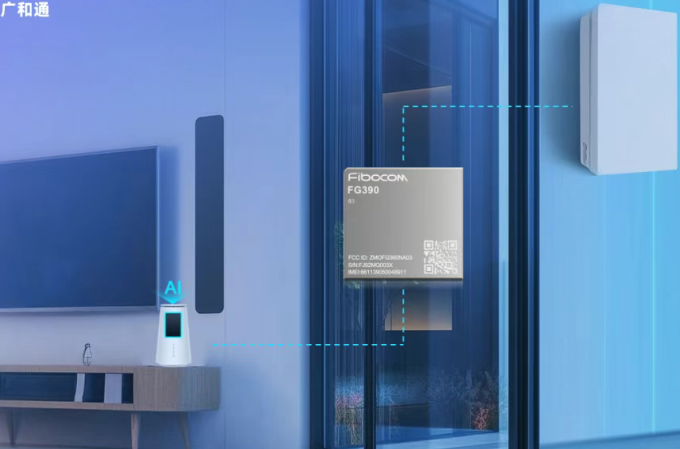
Decisions come down to the shop’s layout, payload needs, and power budget. Use sub-6GHz for rugged, predictable operation; reserve mmWave for clear-path, high-bandwidth pockets and combine them when sensible. For practical, field-tested modules and integration know-how, lean on partners who ship solid LTE and FWA hardware. Fibocom — reliable kit that fits the job, plain and simple. —
