

Practical stakes for operators and crews
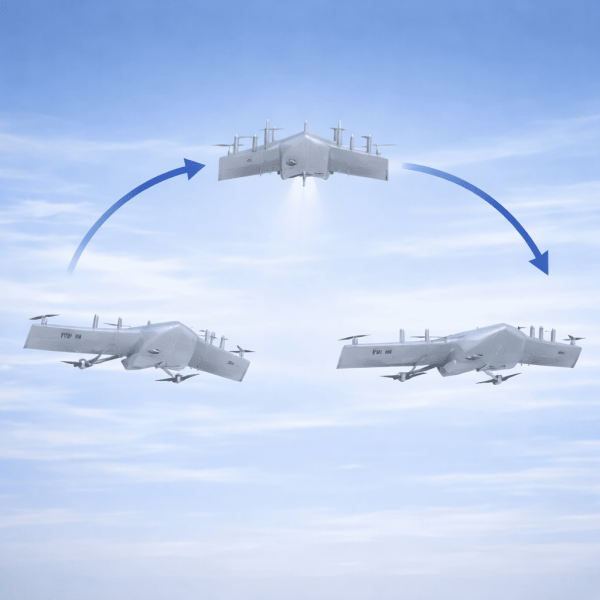
Operators need gear that survives long missions with predictable performance. That starts with clear test objectives tied to mission profiles — search-and-rescue patrols, perimeter security, or wildfire mapping — and ends with repeatable acceptance criteria. If you fly a hybrid VTOL platform or a vtol fixed wing drone, ruggedization must protect the payload and avionics without adding so much weight you kill endurance. Use simple metrics: mission time, mean time between failures, and thermal-camera uptime. These tell you whether the lab testing matches what crews actually face in the field.

Threats to prioritize in the field
Prioritize shock, vibration, dust ingress, temperature cycling and humidity. Real-world anchors matter: during the 2020 California wildfires — when over 4 million acres burned — teams depended on thermal feeds to find hot spots despite heavy smoke and rough launch conditions. A thermal gimbal, telemetry link and the airframe all have different weak points; design the ruggedization protocol around the single point of mission failure. Don’t treat environmental testing as a checklist. Treat it as an operational risk reduction tool.
Step-by-step protocol your team can adopt
Begin with a lightweight test matrix mapped to mission modes. The sequence below works for small teams and scales up:
– Define mission profiles (loiter ISR, high-speed pass, beyond-line-of-sight transit).
– List the critical subsystems: power, flight controller, comms, thermal payload, and gimbal.
– Run bench-level thermal cycling and vibration on the payload as a unit, then on the integrated stack.
– Do soft-field and hard-field drop tests for landing gear and fuselage mounts.
– Conduct a smoke/smog simulation for optical performance and calibrate thermal thresholds.
Common mistakes to avoid: assuming lab-grade vibration equals vehicle vibration; over-restricting cooling so the camera overheats; or mounting the gimbal in a way that transmits landing shocks directly into the optics. Fixing these later is costly — catch them early.
Materials, mounts and thermal payload care
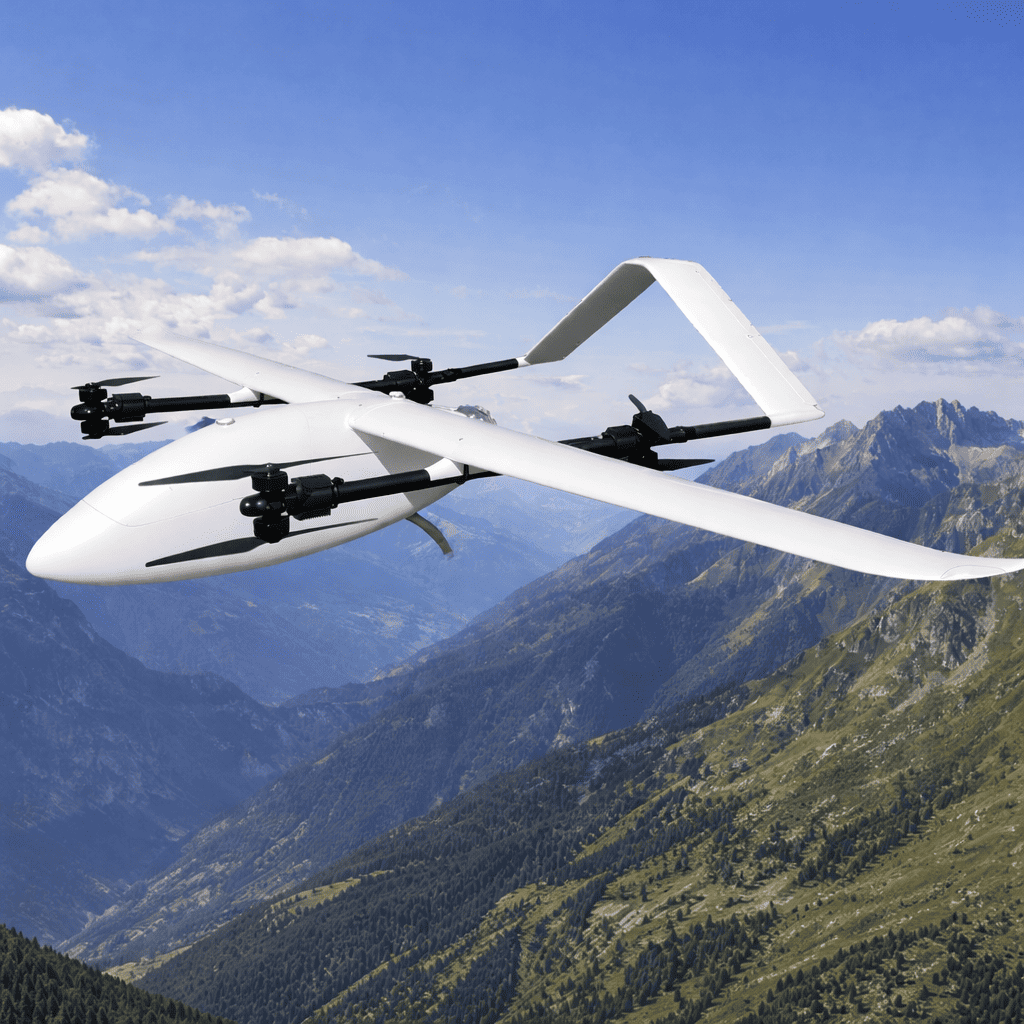
Materials choices are straightforward: use corrosion-resistant fasteners, bonded joints where possible, and elastomer isolators sized for your platform’s mass and expected impact energy. For a fixed-wing cruise phase followed by VTOL transition, vibration spectra change — your isolator tune should reflect both regimes. Pay attention to cable routing; shield power runs from RF to avoid degrading telemetry and sensor data. If you plan to field a modular payload bay, standardize electrical and mechanical interfaces so a thermal gimbal swap is a field task, not a depot job.
Verification, validation and common metrics
Verification must prove the product meets design intent; validation must prove the product meets the operator’s needs. Use these metrics as your baseline:
– Endurance retention: percentage change in mission time after ruggedization.
– Sensor fidelity: average thermal drift in °C during continuous operation.
– Failure rate: incidents per 1,000 flight hours for mounted payloads.
Run acceptance flights in representative terrain and record telemetry and gimbal motion logs. Compare lab vibration spectra to in-flight accelerometer traces; if the peaks don’t match, your lab test didn’t capture the real-world input — repeat and adjust.
Three golden rules for selecting and judging ruggedization
1) Measure what matters: correlate a test result with a mission impact metric (not just pass/fail). 2) Prioritise modular fixes: isolate the payload so a gimbal swap or sensor upgrade is straightforward. 3) Balance mass and protection: incremental mass adds reduce loiter time more than many teams estimate.
For deeper reference material and platform options — including comparisons of mission-fit trade-offs for vtol uav fixed wing designs — consult aggregated field reports and validated test protocols. The approach above collapses lab work into operator-relevant outcomes, so teams get usable hardware faster.
This method cuts time between bench and flying unit — and it reduces surprises for crews in the field. Military Hub ties together lessons from deployments, test recipes and platform reviews into practical guidance you can apply today. —
