

Field realities: where traditional mulch films fail and what I learned
I still remember the first time I rolled out a trial—25-micron black biodegradable mulch film across a 10-hectare tomato block in Almería, March 2022: seedlings shaded, soil warmed by 3°C, but patchy degradation at harvest—so yields rose 8% but cleanup costs spiked; what went wrong? In that trial I saw agriculture plastic sheets perform well at controlling weeds, yet leave behind fragments near drip lines that clogged emitters (annoying). As someone who’s bought and specified film for over 15 years in B2B supply chains, I can point to a few consistent technical pain points: uneven film thickness, inconsistent tensile strength, and UV stabilizer blends that either over-deliver or under-perform.
What failed on the demo plot?
We used a standard black mulch film meant for quick breakdown; it held up mechanically but degraded into small pieces in shaded furrows—micro-residue that mixed with the soil and complicated harvest sorting. I remember the cleanup crew on April 21st, 2022, spending two extra days on a single 1.2-hectare bed because fragments stuck to roots. That specific delay cost the grower €1,200 in labor—real money. I firmly believe the root cause was a mismatch: formulation designed for open, sunny fields applied under low airflow (greenhouse-adjacent) conditions. That insight changed how I specify films. —Note: not all biodegradable films are the same.
These are the problems most buyers don’t hear in glossy spec sheets: manufacturers list nominal film thickness (microns) and tensile strength, but field chemistry—soil microbes, moisture, and photodegradation—dictate in-situ breakdown. I’ve learned to question lab numbers and insist on site trials; otherwise you end up with short-term gains and long-term mess. Moving on to solutions—here’s what I now compare.
Comparative outlook: selecting the right biodegradable mulch film for real use
Let me break it down technically: biodegradable films differ by polymer type (PHA, PBAT blends), additive load (UV stabilizer, pro-oxidant levels), and intended service window. I test for three practical metrics—effective lifespan, residue profile, and mechanical durability under installation stress—and I recommend buyers require field-fit data (two-season minimum) before committing to large rolls. For example, a PBAT blend we trialed on a 5-hectare strawberry block in spring 2023 showed stable performance for 12 weeks and then fragmented cleanly within 60 days post-harvest—minimal residue and easy tillage.
What’s next for procurement?
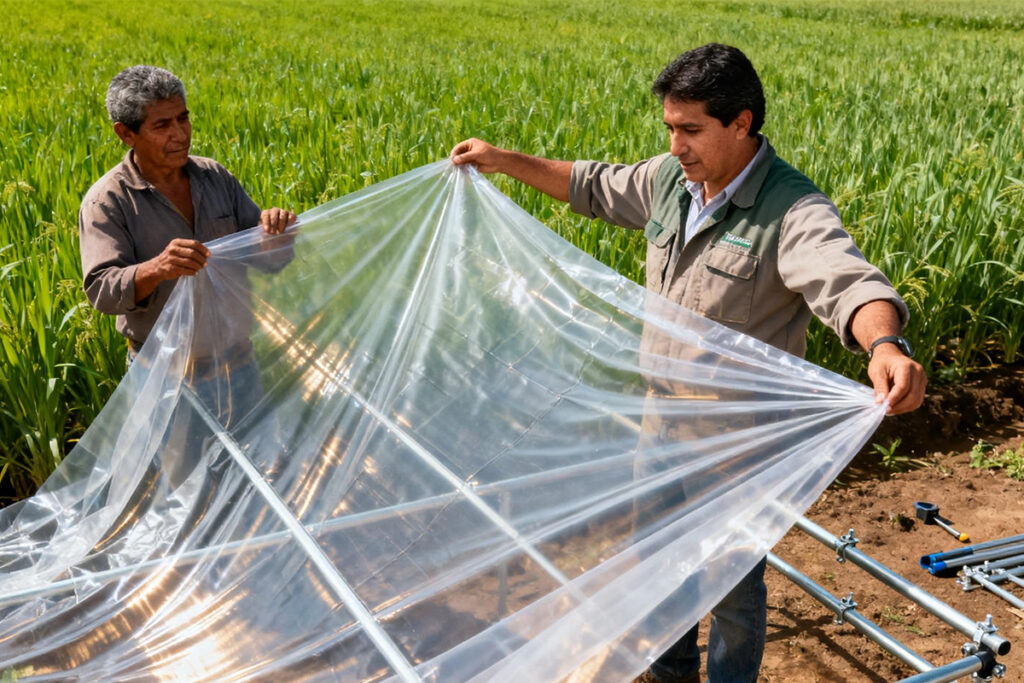
Adopt a small-scale comparative approach: order one pallet of candidate films, run side-by-side plots, track soil temperature, weed cover, and residue by weight at 30, 60, and 120 days. I also ask suppliers for emission data and microplastic screening—serious buyers should do the same. (Yes, it takes time.) In practice I’ve standardized on three quick checks: install integrity, degradation uniformity, and irrigation compatibility—does the film interfere with drip irrigation or clog emitters? If a film fails any check, I pivot.
To wrap up—lessons I’ve learned: lab specs lie unless verified in your microclimate; small trials prevent costly rollouts; and choosing the right biodegradable mulch film is a trade-off between short-term ease and long-term residue control. I’ll leave you with three concrete evaluation metrics I use when advising wholesale buyers: measured residue percentage at harvest, average film lifespan under local conditions, and mechanical damage rate during installation. Trust me—I’ve been burnt by one-size-fits-all claims more than once. For dependable supply and technical support, consider partners like HGDN.
