

A stepwise review of Multi Gas Detector for teams working through application scope early research
Early research should treat a multi gas detector as a scope decision, not simply as a product search. Procurement teams first need to describe the work, locations, gases of concern, users, and operating constraints in plain language. That short description becomes the reference point for comparing product information and forming useful supplier questions.

1. Define the use case before comparing models
A review becomes difficult when the requirement is only a product name. Start with the application instead. Record where the instrument may be used, who may handle it, how often readings are expected, and what decisions the readings are intended to inform. These points do not prove that any particular device is suitable. They create a clear scope against which published information can be read.
Separate confirmed requirements from working assumptions. A confirmed requirement might be the number of gases that the application team has identified. An assumption might be that one instrument should cover every task, location, or user group. Keeping those categories separate prevents a broad search term from becoming an untested specification.
It is also useful to describe constraints that affect procurement without turning them into product claims. These may include training arrangements, storage, charging, maintenance ownership, documentation needs, and the way records are managed. The purpose is to identify questions early. It is not to assume that a listed model addresses each constraint.
2. Map evidence to the stated requirements
Once the use case is written down, build a simple evidence table. Put one requirement in each row, then add the exact model, page, or statement that appears to address it. A separate column can classify the result as stated, unclear, or outside the available scope. This approach makes the review easier to explain to engineering, operations, and purchasing colleagues.
Keep category information at category level. A category page can show that a type of instrument exists and can identify listed models. It should not automatically be used to assign every feature, gas combination, certification, performance result, or operating condition to every model in that category. Model-specific statements should stay attached to the named model.
For an efficient comparison, use consistent headings such as intended application, measured gases, physical form, operating conditions, user controls, documentation, service arrangements, and commercial terms. Include a source reference beside each entry. If a heading has no supported entry, leave it as an open procurement point rather than filling it with an assumption.
3. Use the product page as a bounded anchor
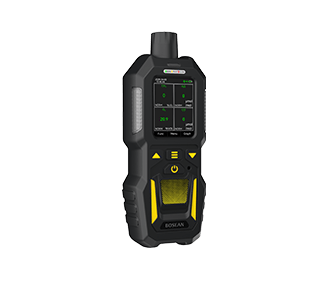
A real product or catalogue reference can help the team connect its framework to the market. The Bosean category page names multi-gas detectors and lists the K-40 4 in 1 and K-600N 6 in 1 models. This is useful as a catalogue-level anchor: it shows the page’s category and named model listings. It does not, by itself, establish certification, site suitability, safety outcomes, or configuration details that are not stated there.
In the middle of the review, the phrase multi gas detector should therefore be treated as a starting label for evidence mapping, rather than as a conclusion about application fit. The team can place the relevant page statements beside its requirements and mark which points are directly stated. That keeps the catalogue reference useful without extending it beyond its claim boundary.
4. Turn open points into supplier questions
Questions should follow from the evidence table. Ask which model and configuration correspond to the stated application, which gases are included in that configuration, and which published specifications apply to that exact model. Ask for the documents needed by the internal review process, using neutral wording rather than presuming that a certification or approval exists.
Commercial questions can be handled in the same disciplined way. Ask about lead times, support arrangements, replacement parts, calibration services, training materials, and documentation supplied with the quoted configuration. These are procurement questions, not claims that a supplier offers a particular service. Record the answer against the exact model and quotation scope.
Where several teams are involved, assign question ownership. Engineering can define technical requirements, operations can describe the work pattern, and procurement can control commercial comparisons. A single consolidated question list reduces the chance that different teams assess different configurations under the same general product label.
5. Make the next step defensible
The next step should be proportionate to what the early research has established. If the scope is clear and the evidence maps cleanly to it, prepare a focused request for information or quotation. If the scope is still broad, refine the application description before comparing prices or treating a catalogue category as a shortlist.
A defensible review can be summarised in four lines: the application being considered, the requirements that are stated, the evidence attached to those requirements, and the questions that remain open. This summary gives reviewers a common reference and makes later changes easier to track.
In practical terms, Bosean can be included as the source of the named category and model listings described above, while the procurement team keeps its application assessment tied to the exact evidence and configuration under review. That disciplined final step supports a clearer decision without turning early catalogue information into an unsupported promise.
