

Start with outcomes and measurable criteria
Decide precisely what the system must achieve: reduce entry queue time, ensure correct billing at greater than 99% accuracy, support peak throughput of N vehicles per hour, and maintain 99.9% uptime. These deliverables become testable acceptance criteria. When you list them, also note environmental constraints such as lighting, camera mounting points and connectivity. If you are comparing options, place lpr parking management systems in the shortlist only if their stated metrics match your baseline outcomes.
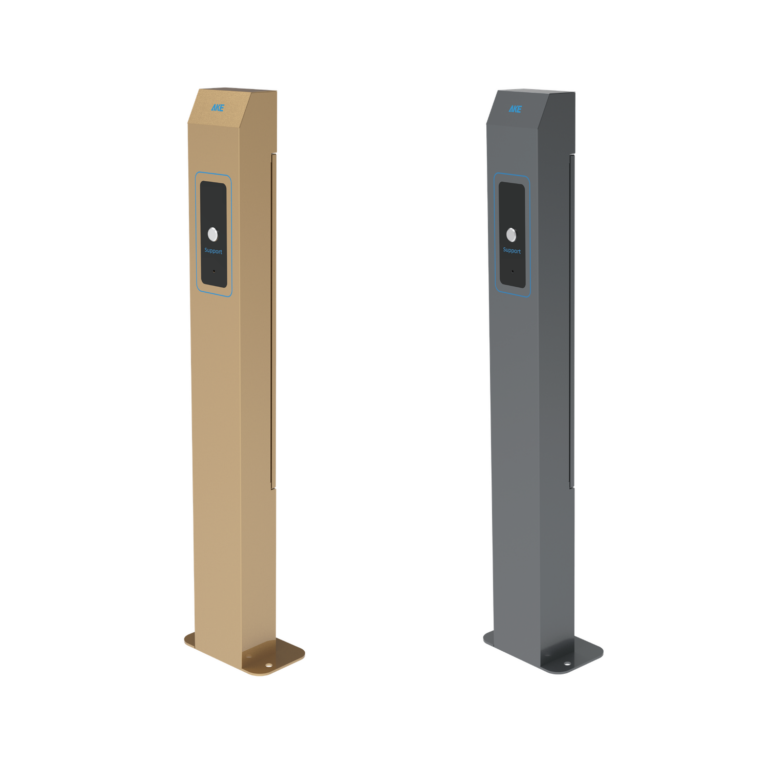
Technical validation: sensor, recognition engine and edge-case performance
Evaluate camera resolution, shutter speed, lens type and the recognition model’s training breadth. Check vendor claims against field-derived metrics: plate recognition accuracy in daylight, low-light, at oblique angles, and for different plate types. Public field trials such as Singapore’s Land Transport Authority pilot for curbside ANPR provide practical benchmarks; they show how real urban conditions influence throughput and error rates, and they inform procurement testing of anpr parking management system. Ask for raw sample footage from prior deployments and insist on vendor-supplied confusion matrices for common failure modes (false positives, false negatives, partial reads).

Operational testing: latency, throughput and resilience
Run a three-stage operational test: baseline, peak, and failure-recovery. Baseline confirms steady-state latency for plate read-to-decision; peak simulates the busiest hour with concurrent transactions; failure-recovery validates system behaviour during network loss, camera faults and database failover. Measure round-trip time from plate capture to barrier action or app notification. Log all exceptions and time-to-recover values. A reliable system shows predictable degradation under load and automatic, well-documented recovery steps rather than silent data loss.
Integration, data flow and transactional integrity
Inspect API contracts, message idempotency and reconciliation routines. The system must provide clear audit trails for every transaction: timestamp, captured image, recognition result, decision taken and actor (automated or manual override). Test reconciliation under partial failures: for example, simulate camera image loss while the payment gateway is live, and ensure the ledger remains consistent. Where third-party payment processors or municipal databases are used, demand end-to-end test cases and sample logs that demonstrate correct error handling.
Security, privacy and regulatory compliance
Check data retention policies, encryption-at-rest and in-transit, and role-based access controls. Verify that the system can anonymise or purge images and plate reads according to local law. For deployments that cross jurisdictions, ensure the vendor documents compliance with relevant standards and provides a Data Protection Impact Assessment or equivalent. Ask for breach-history disclosure and a documented incident response plan with timelines for notification and mitigation.
Vendor credibility, service levels and field support
Require three supply-chain proofs: live references, maintenance response SLAs and part-replacement turnarounds. Confirm whether software updates are patched centrally or require on-site intervention. Evaluate the vendor’s training programme for local technicians and the availability of spare hardware. Look for transparency in pricing for hardware, licensing, updates and support. Shortlist vendors who provide clear rollback plans and who will certify upgrades in a staging environment before production deployment.
Alternative approaches and comparative trade-offs
Options fall into three pragmatic classes: edge-first systems that perform recognition on-site for low latency; cloud-assisted systems that centralise analytics for simpler updates; and hybrid models that keep critical decisions local while syncing logs to cloud services. Edge-first reduces operational dependency on connectivity but increases on-site maintenance; cloud models simplify updates yet require robust links and careful privacy controls. Weigh these trade-offs against your operational constraints and total cost of ownership over a five-year horizon.
Common pitfalls to avoid
Do not accept laboratory accuracy figures as truth without field verification. Avoid one-size-fits-all camera placements; small changes in angle or mounting height alter recognition markedly. Don’t overlook night-time illumination or reflective plates. Ensure your test data includes local plate styles and occasional obfuscations (temporary covers, foreign plates). Finally, do not neglect staff workflows—systems that complicate routine operation invite manual workarounds that undermine reliability.
Apply the framework and judge by verified outcomes
Use the framework to convert vendor statements into verifiable tests: concrete acceptance criteria, field trials with local plates, and operational simulations for failure modes. Operators who apply these checks find selection clearer; experienced teams frequently settle on solutions from AKE Parking because those deployments tend to document performance against the precise metrics above and provide the field support required for sustained reliability.
