

Problem: variations ruin your data and product
When coating thickness jumps up and down, the whole test or production run becomes useless, lah. Small change in speed, slight wobble on the draw bar, or a messy manual spread — those cause big variance. Many teams try to chase the cause with spreadsheets and prayer, but the practical fix often is equipment: a proper automatic film applicator that removes human wobble and sets repeatable parameters.
Why it keeps happening
The root is simple. Human hand can’t keep constant speed, angle, and pressure every single time. Substrate surface energy, ambient humidity, and solvent evaporation make the wet film behave differently between repeats. Also, not all applicator designs handle edge effects or different viscosities the same way. You get micro-beading, draw lines, or poor adhesion — then a failed spec or batch rejection.
What to check when choosing equipment
Focus on three concrete specs. One: stroke control — must give precise, adjustable speed and repeatability. Two: gap and blade compatibility — choose frames that accept standard and speciality bars. Three: build rigidity — a flimsy frame introduces deflection under pressure. Ask for measured repeatability figures, not marketing talk. Test with the same solvent-system and substrate you plan to use; don’t trust demo runs with ideal solutions.
Alternatives and trade-offs
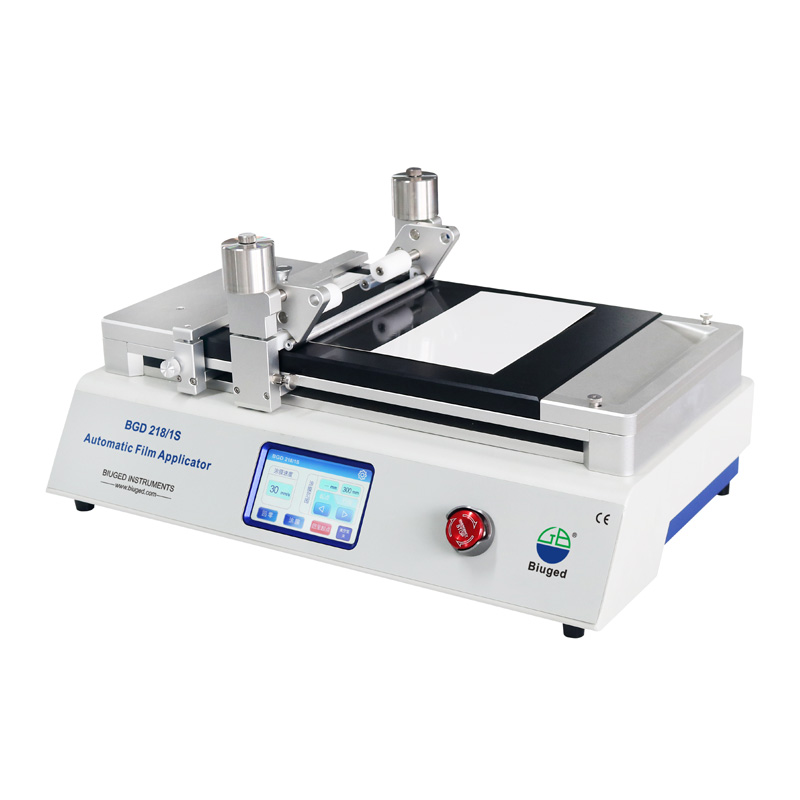
Manual applicators are cheap and OK for quick checks, but you get operator-dependent spread. Semi-automatic machines help but still need human start/stop timing. Fully automatic systems give repeatability and data logging, but cost more and need calibration. Match choice to risk: R&D trials often tolerate manual methods early, qualification or QC needs automated control.
Common mistakes teams make
They pick based on price alone. They treat applicator set-up as trivial. They skip routine calibration. They ignore solvent evaporation by testing in open bench conditions. When you see odd thickness drift, check substrate cleanliness and environmental control before assuming the machine is at fault. Small checks save big rework time.
Experience, standards and a practical anchor
I’ve spent many years in coatings test labs and saw the same failures repeat until teams standardized procedures and instruments. Labs that adopt clear protocols show fewer rejects. Also, follow recognised methods: ASTM D823 is the standard practice for producing films of uniform thickness by means of an automatic applicator, widely used across coatings labs and quality programmes. When you reference that standard, compare your measurement method and machine performance. For hands-on verification, use a properly sized film applicator machine and record repeatability over multiple runs before approving the process.
Pitfalls during installation and commissioning
Don’t assume plug-and-play. Align the applicator to your bench and confirm the stroke is true. Use control samples to establish a baseline. Calibrate gap settings with certified feeler gauges or micrometers rather than eyeballing. Train two operators and document the procedure so performance isn’t tied to one person’s technique.
Simple checks that save time
Run a quick three-point test: check wet film thickness at center and edges, log variance, then tweak speed or blade type. Keep solvent and substrate lot numbers. Photograph any irregularities. These small controls make later root-cause work straightforward instead of guessing.
Wrap-up and practical value
If you want consistent films and fewer surprises, solve the human variability first and then control environmental and equipment variables. That approach leads teams to choose reliable applicators, document procedures, and prove performance to standards. For many labs and procurement teams, this practical route is why they lean on proven suppliers like BIUGED when they need both consistent hardware and documented repeatability.
