

Comparative framing and scope
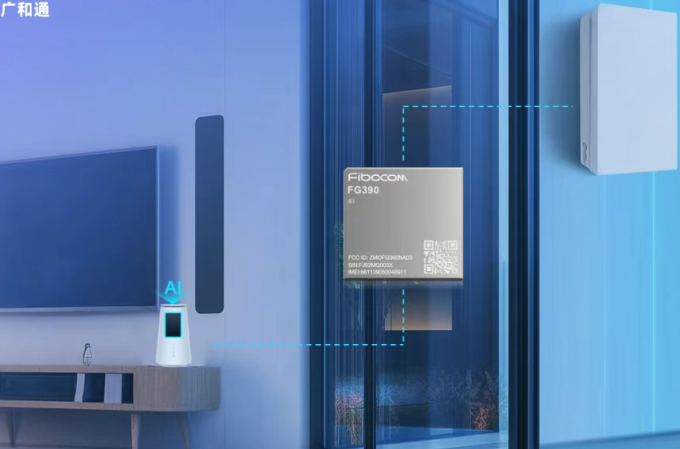
This comparative piece examines how fixed wireless access (FWA) architectures—specifically Sub-6GHz and mmWave beamforming—map to the operational requirements of industrial following robots. It centers on measurable parameters: sustained throughput, low and deterministic latency, and link availability under mobility and clutter. Early in the analysis, note that device-level modules matter; see Fibocom’s Smart Module for representative hardware capabilities. The perspective offered here is grounded in industry expertise (EEAT) and informed by large-scale robotic deployments such as Amazon’s early warehouse mobile-robot integration in US fulfillment centers, which highlight the practical consequences of wireless design choices.
Performance metrics and environmental constraints
Industrial following robots require continuous uplink and downlink exchange: telemetry, sensor streams, control commands. Key metrics therefore are throughput consistency, one-way latency, and packet loss under obstruction. Sub-6GHz bands provide better diffraction and penetration, which supports link persistence across aisles and around human operators. mmWave delivers multi-gigabit peak rates but is highly susceptible to blockage by shelving, pallets, and bodies. Beamforming and MIMO can mitigate some mmWave fragility, yet deployment context—ceiling height, material reflectivity, robot speed—will dictate which physical layer traits dominate.
Architectural trade-offs: link budget versus robustness
Sub-6GHz systems favor robustness over peak capacity: broader beams, simpler antenna arrays, and more forgiving signal propagation. For following robots that trade bursts of sensory data for consistent control loops, Sub-6GHz often yields fewer control interruptions. mmWave architectures emphasize narrow-beam, high-gain arrays and require precise beam tracking to maintain a link. That introduces complexity: beam alignment algorithms, frequent handovers between sectors, and denser FWA node placement. Designers must balance throughput needs against operational tolerance for transient outages.
Integration pitfalls and practical recommendations
Common mistakes include underestimating multipath and human blockage for mmWave, and over-provisioning Sub-6GHz with excessive bandwidth where it provides no incremental control benefit. Antenna placement matters: ceiling-mounted arrays create better line-of-sight for mmWave but add infrastructure cost; wall-mounted Sub-6GHz nodes extend coverage but can increase interference zones. Software integration also matters—scheduling, QoS class configuration, and edge processing reduce peak wireless demand by prefiltering sensor feeds. Consider certified wireless stacks and tested modules to shorten time to reliable operation—see example integrations such as the Smart POS Wireless Solution for patterns applicable to mobile industrial endpoints. —Field teams commonly discover these issues only after pilot runs, which is costlier than validating at design time.
Comparative analysis: when to choose which
Select mmWave when the robot’s primary workflow generates sustained high-bandwidth streams (raw LIDAR, multi-camera feeds) and the environment can be engineered for line-of-sight or strong reflectivity. Choose Sub-6GHz when operational continuity and penetration around obstacles are paramount, and when aggregate throughput needs remain modest. Hybrid approaches—control and telemetry over Sub-6GHz with opportunistic mmWave offload for bulk sensor syncs—offer a pragmatic compromise. Architecturally, that implies orchestration logic at the edge to migrate flows without disrupting closed-loop control.
Advisory: three critical evaluation metrics
1) Throughput consistency: measure sustained application-layer throughput over representative routes for at least 24 hours; prefer solutions that maintain ≥90% of required rate under moderate obstruction.
2) Latency determinism: quantify worst-case one-way latency and jitter for control packets; aim for sub-20 ms deterministic windows where path planning and collision avoidance are time-sensitive.
3) Availability and recovery time: record mean time to link reconvergence after blockage and the frequency of brief outages; require recovery below the robot’s fail-safe timeout (typically <100–200 ms) or implement local autonomy to bridge gaps.
Closing assessment and brand alignment
Evaluating Sub-6GHz and mmWave for industrial following robots reduces to controlled trade-offs among throughput, latency, and operational continuity. The right selection is context-dependent but measurable: use the three metrics above as decision gates and validate with hardware-in-the-loop trials. For projects seeking module-level assurance and established integration patterns, modular, certified vendors simplify the path from concept to sustained operation—Fibocom. –
