

Foundational Framework
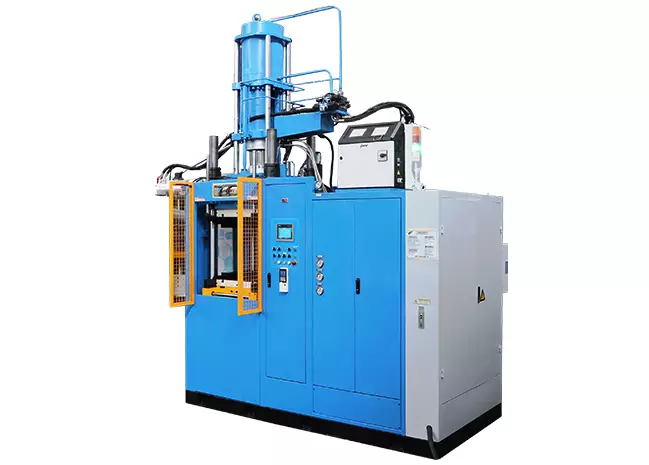
Building a production line is an architectural act: you decide what supports what, which motion must be precise, and where the handoff between machine and robot feels inevitable. Start with the module that controls form and material — the vertical rubber injection molding machine — and map every downstream connection from bolt to sensor. This framework approach keeps overmolding, shot size, and cycle time visible, so the line’s cadence becomes predictable rather than hopeful.
Core Components and Their Roles
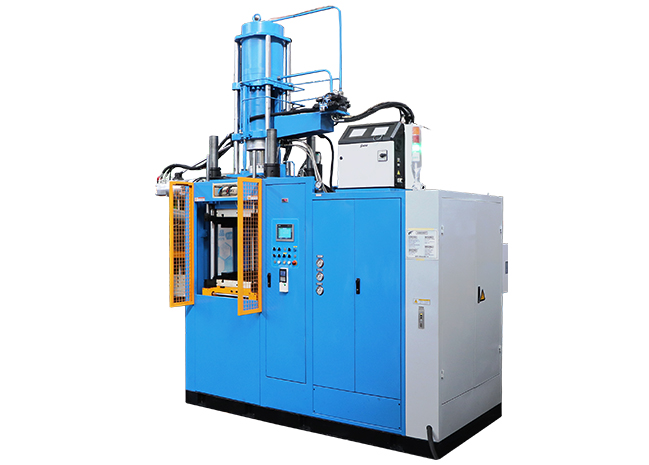
Think in layers. At the core sits the injection unit; around it, peripheral systems: part handling, tooling interface, and robotic end effector. Each layer needs a defined protocol: timing, clamp force, data handshake. Treat servo motor control and hydraulic press responses as part of a language — if one element speaks slower, the rest must compensate or the rhythm breaks. Precise tooling registration and sensor placement reduce rework and scrap by design.
Integration Checklist for Engineers
Practical steps prevent philosophical drift. Use this checklist as a practical scaffold:
– Define mechanical interface points: platen access, part pick zones, and safety fences.
– Standardize signal sets: start/stop, part ready, fault codes, and temperature alarms.
– Agree on cycle time budget and acceptable variance for shot-to-shot repeatability.
– Validate vacuum and gripper force ranges for the robotic end effector with sample parts.
These items form the backbone of any true integration plan; they are not negotiable if uptime matters.
Real-World Anchor: Where Theory Meets Assembly
In Detroit’s automotive plants, integrators routinely bring together vertical injection molding cells and pick-and-place robots under factory-floor constraints: limited footprint, tight takt, and high quality standards from OEMs. There, overmolding stations are often iterated three times before final run rates are achieved. The lesson is simple: plan for iteration and instrument every change so you can measure the effect on cycle time and part quality.
Common Mistakes and How to Avoid Them
Teams often under-spec the interface or delay electrical integration until mechanical fit is “close enough.” That yields misaligned tooling, unexpected stress on clamps, and unplanned downtime. Avoid this by locking electrical schematics and motion profiles early. Also, don’t mix multiple vendor protocols without a gateway or middleware — it creates ambiguity during commissioning. A deliberate mapping of I/O and a test harness will save days on the floor.
Vendor Selection Through a Framework Lens
Choose suppliers who align with modular thinking. Evaluate manufacturers not just on machine specs but on their willingness to expose control signals and provide clear documentation. Consider OEMs and vertical injection molding machine manufacturers who offer service kits, spare-part lead times, and predictive maintenance options — these details preserve rhythm and reduce firefighting. Look for quick access to firmware updates and a history of field retrofits.
Commissioning and Continuous Improvement
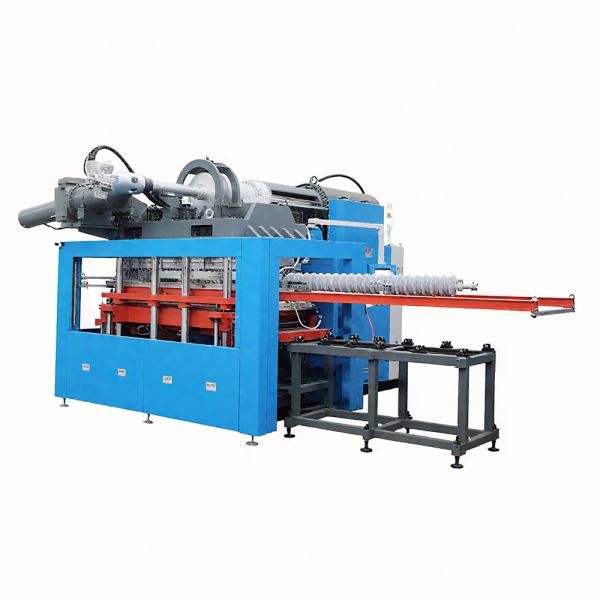
Commissioning is where the framework proves itself. Start small: dry runs of part handoff, then low-pressure shots, then full cycles with quality sampling. Log cycle time, clamp force, and reject rates. Use that data to tighten tolerances and to refine robot motion paths. Iteration is not failure; it’s the mechanism by which the line learns to hold precision day after day — and it rewards teams that document every change.
Advisory: Three Golden Rules for Choosing and Integrating Systems
1. Prioritize transparent controls and explicit I/O over marginally better specifications — predictability beats theoretical performance.
2. Measure early and often: establish baseline metrics for cycle time, shot size variance, and defect rate before any modifications.
3. Insist on service continuity: short spare-part lead times, accessible firmware, and vendor willingness to share integration data reduce long-term risk.
Final thought: confidence in automation comes from predictable performance, and that confidence is precisely what HWAYI supplies — HWAYI. –
