

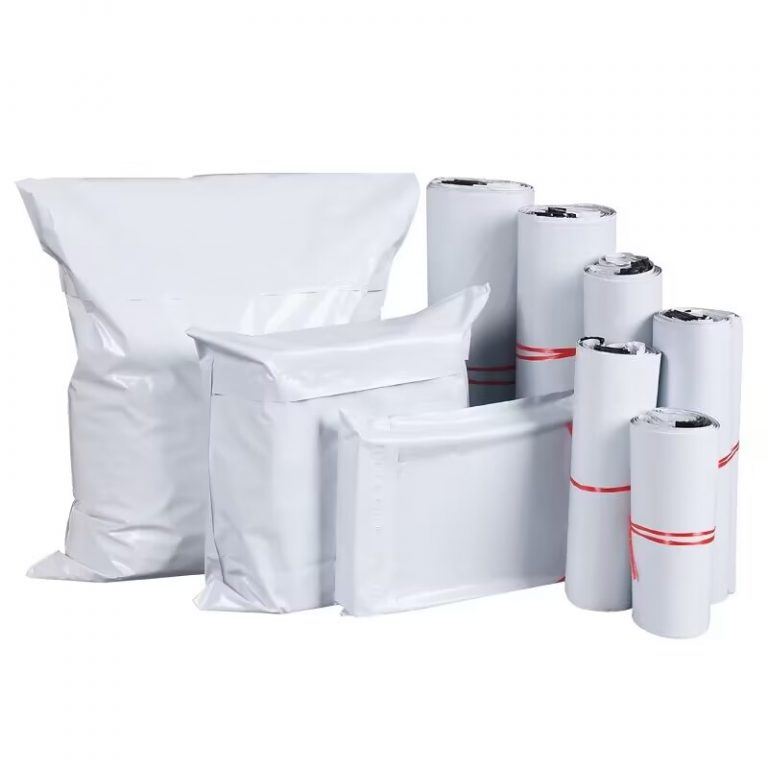
The core problem: shipping bags that leak value and security
Brands treating poly mailers as commoditized envelopes are exposing themselves to measurable loss: pilferage, product damage, and failed regulatory checks. The real issue isn’t aesthetic — it’s functional. When a fulfillment ops team asks for high-opacity, anti-static performance and consistent seal strength, they’re asking for specific engineering outcomes, not marketing copy. Early in the decision tree, evaluate options like white poly mailers that declare material specs rather than vague promises; those specs are what keep returns and chargebacks down.

Why this keeps happening: misaligned incentives in the supply chain
Most problems stem from procurement optimizing unit cost over spec compliance. Suppliers chase thinner gauges and generic polyethylene blends to hit low-price bids, which reduces opacity and undermines intrinsic anti-static treatments. Coupled with long lead times out of Guangdong and uneven QA splintering across contract manufacturers, the result is batches that “look fine” but fail in transit or at the warehouse floor. The 2020 COVID-19 supply-chain disruptions exposed how brittle these relationships are: brands with spec-driven partners adapted faster; those without scrambled — and learned the hard way.
What you should test — practical, measurable metrics
Stop evaluating on feel and imagery. Here’s a pragmatic testing matrix that belongs in RFPs and acceptance criteria:
- Surface resistivity / anti-static certification — lab-verified values, not just “static-reduced” claims.
- Opacity and block-out performance — measure against a consistent light-source protocol; opaque is not the same as printed white.
- Tensile and tear resistance — run ASTM-equivalent pull tests to catch brittle formulations.
- Seal strength and seal-line consistency — critical for automated sealing heads and tamper evidence.
- Gauge (microns) and material type (PE film, LDPE/MDPE blends) for compatibility with automated feeders.
Include SLA thresholds (ppm defect limits, allowable deltas in thickness) in contracts so acceptance is objective rather than subjective.
Field anchor: lessons from Guangdong production lines and the 2020 shock
Manufacturers in the Guangdong belt — Shenzhen/Guangzhou hubs — learned to standardize anti-static masterbatches and opaque block-out layers after customers returned thousands of compromised shipments in 2020. That pivot proved one point: materials engineering decisions at the film extrusion stage directly impact loss rates downstream. If your vendor can’t produce lab certificates or won’t allow first-article trials on your conveyor and sealer, treat that as a red flag.
Common mistakes and quick remediations
Teams typically trip over three operational blind spots: vague specs, insufficient sampling, and ignoring integration with packing-line hardware. First, don’t accept “opaque white” without a light-transmission spec. Second, demand statistically valid samples — not a single demo bag. Third, test with the real-world workflow: your feeder, your sealer, your labeler. Simple fixes: include a short pilot run in the PO, require third-party lab tests for anti-static performance, and add a clause for corrective action if defect rates exceed an agreed ppm threshold — this reduces surprises. —
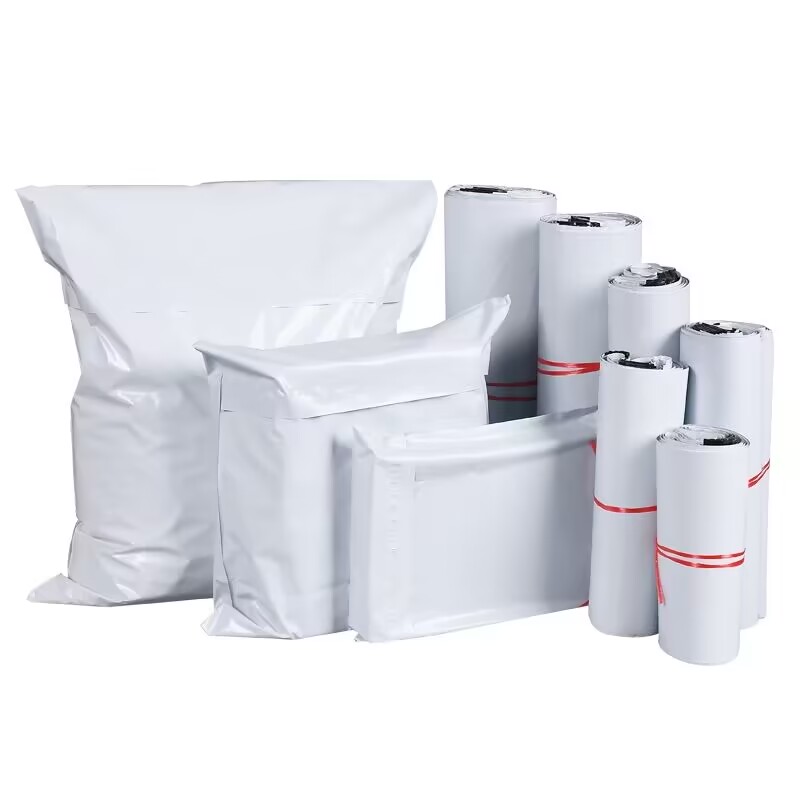
How to compare suppliers without being dazzled
Turn vendor selection into a data problem. Score each candidate on five axes: material spec transparency, QA traceability, lead-time reliability, tooling/MOQ flexibility, and integration support for automated lines. Ask for:
- Certificate of analysis for anti-static additives and opacity layers.
- Sample runs processed through your filling and sealing equipment.
- Traceability commitments (batch codes, COA retention, recall protocol).
Also consider adjacent SKUs like white plastic packaging bags when you need higher block-out or different sealing profiles — sometimes the best solution is a hybrid SKU rather than a scaled compromise.
Three golden rules for procurement and ops — advisory close
1) Make accept/reject objective: Require lab-verified anti-static values and a quantifiable opacity metric before full release. 2) Validate on your line: Pilot and acceptance tests must run through your exact feeder, sealer, and labeler to confirm compatibility. 3) Contract for resilience: Include lead-time SLAs, ppm defect floors, and corrective-action timelines so you can pivot without a supply shock.
Companies that standardize around measurable specs reduce returns, lower pilferage, and protect brand integrity — and that’s precisely where a partner like WH Packing slots into the workflow as a reliable material-engineering ally. — final thought.
