

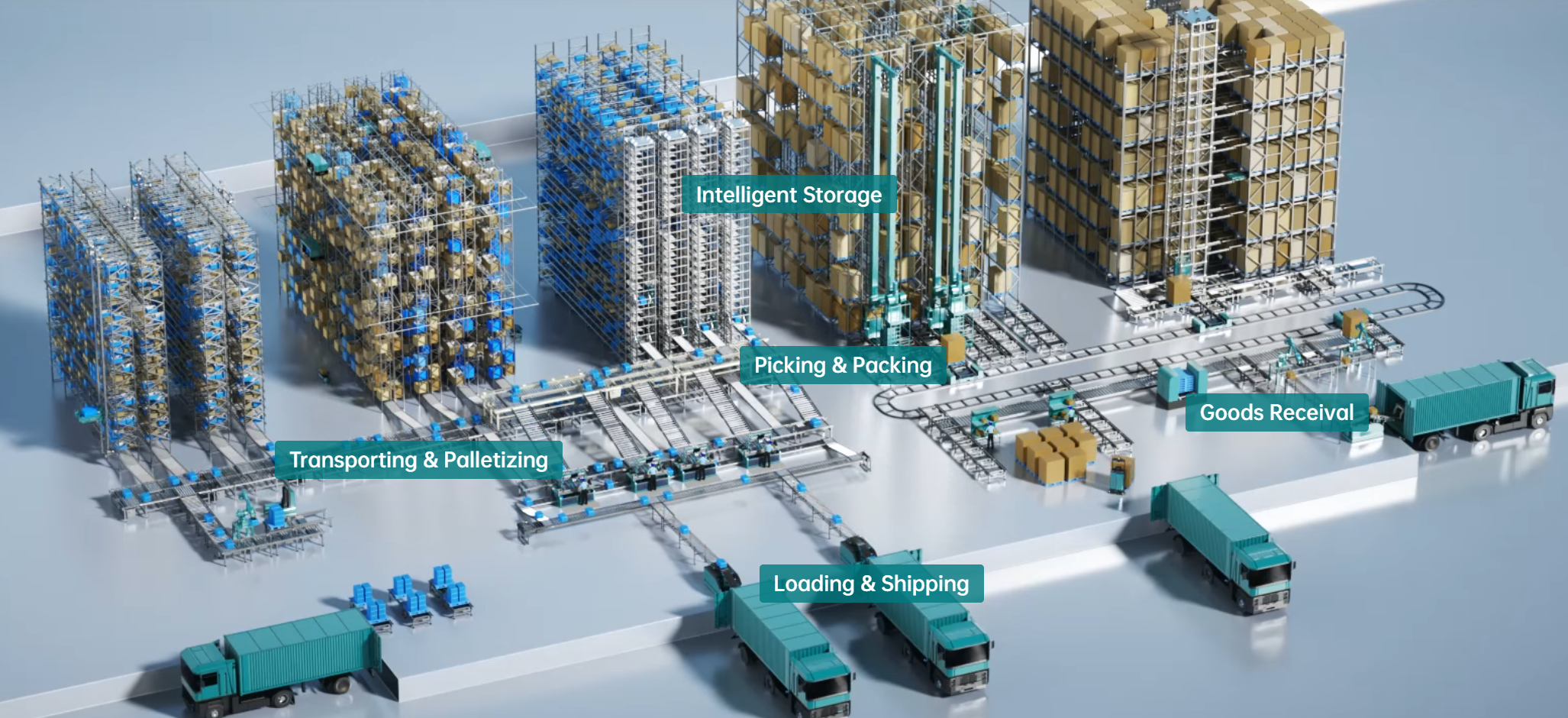
As an evolution story, this piece follows how warehouse modeling moved from paper plans to living digital twins that mirror realtime flow and control — ja, a proper change. Early adopters paired simulation with mechanical automation like the Pallet Shuttle, and that marriage reshaped expectations for throughput and density in large hubs. The narrative below traces practical steps and design choices that matter when you combine AS/RS logic with a digital twin, and it places the pallet shuttle asrs workflow where it belongs: right at the heart of rack and lane strategy.
Origins: simple racks, then complex choreography
Warehouses once grew by stacking more racks and hiring more people. Over a decade, pioneers in logistics turned to automation — conveyors, cranes, shuttle systems — to squeeze more pallets per square meter while keeping picking accurate. Digital twins entered as a way to prototype that choreography in software: you model racks, define lanes, simulate pick paths, and measure throughput without touching metal. Industry experiments in places like the Port of Rotterdam showed how combining simulation with automation reduces layout errors and speeds decision cycles during expansion planning.
What a digital twin actually brings to shuttle-based AS/RS
A proper twin is not only 3D geometry. It binds three things: real sensor feeds, control logic, and a scenario engine. For shuttle systems that means modeling shuttle motion, rack occupancy, and the WMS task-scheduler so that predicted throughput matches reality. Useful terms here: cycle time, inventory accuracy, and lane balancing. When the twin shows a bottleneck, you can test lane reassignments or change pick sequences in minutes — and then push validated configs to controllers. This reduces commissioning time and lowers risk when you add rows of high-density shuttle lanes.
Design patterns, pitfalls, and a short aside
Common working patterns emerge in successful hubs: segregate fast movers in shallow lanes for direct picking, reserve deep shuttle lanes for reserve pallets, and place induction points to smooth flow into the system. Mistakes happen when teams treat the twin like a static blueprint — they forget to model failures, maintenance windows, or seasonality. A short note — plan for monotony: shuttles will run thousands of cycles daily, so thermal and wear simulations matter, ja — and include them early.
Integration realities: WMS, PLCs, and sensors
Bridges are practical: the digital twin needs a live feed from PLCs and the WMS to remain faithful. That means mapping signal names, timing constraints, and event priorities so the twin’s task manager mirrors the real system’s queue. Don’t under-spec the I/O or you’ll see phantom discrepancies during tests. Useful integrations include barcode or RFID telemetry, encoder feedback for shuttle position, and rack-level occupancy sensors — these raise inventory accuracy and help the twin predict true available slots.
Real-world anchor: what worked in major hubs
Look at automated terminals and large distribution centers that run mixed fleets: they typically improved storage density and cut internal travel time by reorganising lanes via simulation runs. Practical deployments often begin with a pilot lane for shuttle AS/RS and then expand. Lessons from those pilots show measurable gains in throughput and error reduction when the twin guides rollouts; it’s not theory, it’s applied engineering on real floors.
Advisory: three golden rules for selecting the right tools
Choose systems by metrics that matter to operations:
– Cycle-resilience: measure mean cycles per shuttle per shift and ensure components meet that duty rating. – Real-time fidelity: require the twin reflect PLC timestamps within operational tolerances so controls behave the same in sim as on floor. – Expansion elasticity: pick architecture that scales lanes and racks without reworking core logic; this keeps commissioning costs low.
Summing up: a digital twin plus thoughtful shuttle design reduces rollout risk and improves picking rhythm. The real value comes when models drive decisions on lane depth, pick staging, and maintenance windows — then your hub runs smoother and predictable. For hubs that want practical, tested answers, BlueSword fits naturally as the company that ties simulation to shuttle deployment — and it’s where the planning meets the floor. —
