

Begin with real users, not tech
Start by watching people park: the commuter hunting a spot, the security guard juggling shifts, the building manager tracking occupancy. Those behaviors reveal priorities you can’t guess from specs. Map the frustrations (time lost, opaque pricing, queuing at exits) and the clear wins (faster entry, reserved spots, live availability). If your roadmap ignores these, it’s a feature catalog, not a product. Early prototypes should validate solutions like lpr parking management systems against actual user behavior, not just theoretical throughput.
Define core user jobs and measurable outcomes
Translate user needs into jobs-to-be-done: find a spot quickly, guarantee a reserved bay, report a fault, or reconcile monthly billing. For each job pick one clear metric: time-to-park, reservation success rate, incident resolution time, or billing accuracy. These metrics drive trade-offs. If time-to-park matters most, prioritize occupancy sensors and live maps over complex loyalty features. Keep metrics visible to product, design, and ops teams so decisions center on user impact.
Build feature slices that deliver user value fast
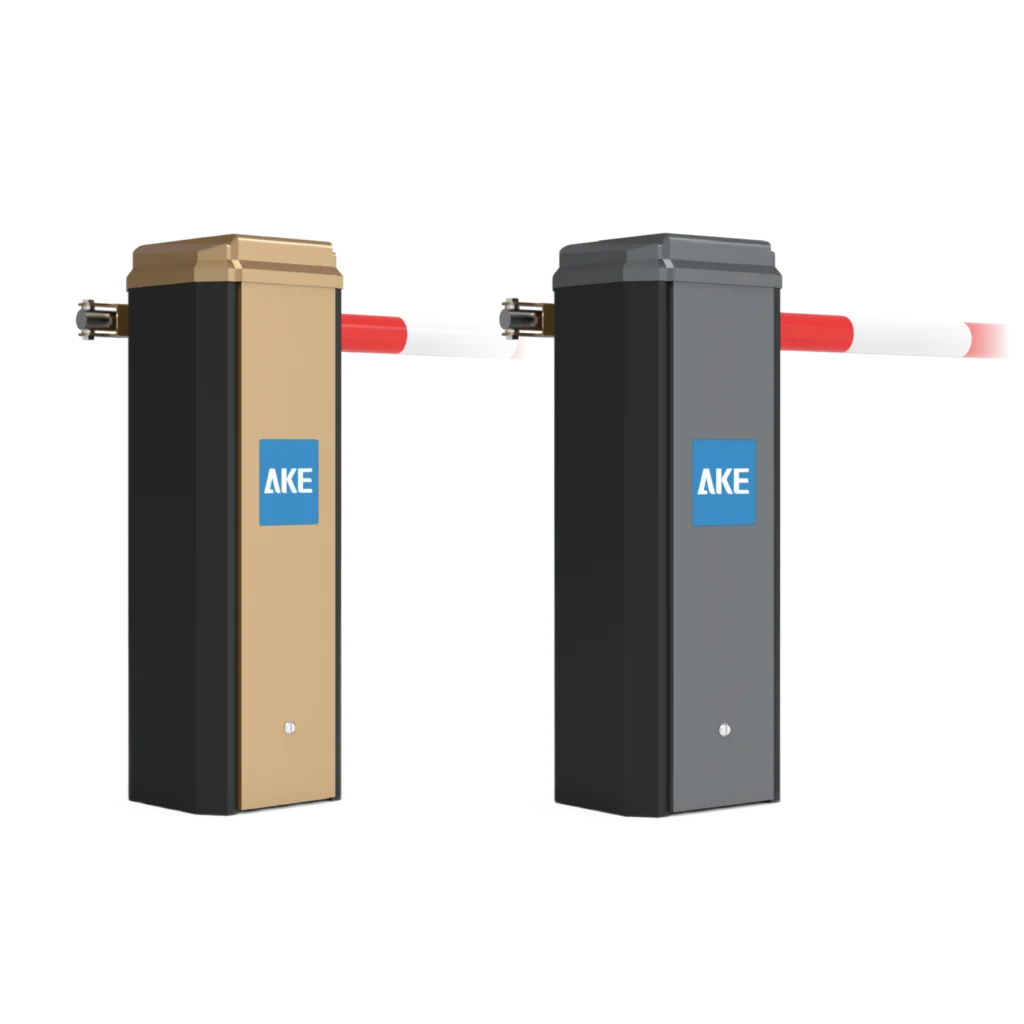
Design in vertical slices: a reservation flow that starts in an app and ends with barrier access, or a camera-to-dashboard pipeline that turns images into permitted entries. Each slice should be testable with real users. For example, an LPR-enabled barrier integrated with payment and gate control solves access, enforcement, and revenue capture in one deployable slice. Ship the smallest version that proves the user job is solved, then iterate based on real usage.
Validate assumptions with operational pilots
Run short, instrumented pilots in representative locations — workplace lots, mixed-use garages, or curbside zones. Pilot data tells you if your detection accuracy, queuing model, or pricing logic holds up under real arrival patterns. Collect qualitative feedback from attendants and drivers; small workflow snags often break adoption. Treat pilots as experiments with clear hypotheses and exit criteria.
Technical decisions driven by user outcomes
Choose tech for the user outcome, not for novelty. LPR brings fast, touchless entry for regular users and simplifies enforcement, but it needs robust edge processing and good lighting to work reliably. Sensor-based occupancy adds accuracy for real-time maps but increases hardware maintenance. Favor architectures that fail gracefully: fall back to manual validation or app-based overrides when automated detection misses a plate or misreads a bay.
EEAT and a real-world anchor
I’ve worked alongside urban mobility teams and engineers who built operational pilots that taught us where automation helps and where human handoff is critical. Look at Singapore’s Smart Nation tests for smart parking — they show how city-scale pilots expose edge cases you won’t see in a lab. That lived experience informs system design and vendor selection. For LPR-specific deployments, evaluate proven stacks like lpr parking solutions that have been field-tested in city and private parking environments; that reduces risk versus unproven integrations.
Common pitfalls and how to avoid them
Overfitting to one use case. A campus solution might fail in retail peak patterns. Ignore ops cost. An attractive capex plan can hide expensive firmware updates and sensor swaps. Skipping human workflows. Automated systems still need clear exceptions and simple overrides for attendants. To avoid these, model multiple traffic profiles, budget for lifecycle maintenance, and design simple exception screens for staff.
Viable alternatives and integration choices
If LPR isn’t feasible, consider RFID or app-based QR access for repeat users, and sensor-based guidance for general availability. Hybrid models often win: LPR for monthly permit holders, sensors for transient visitors. Ensure your platform exposes clean APIs so payment, enforcement, and building management systems talk to each other without brittle point-to-point integrations.
Scale with operations in mind
Plan for maintenance: remote diagnostics, OTA updates, and clear SLAs for camera recalibration or barrier failures. Create a playbook for common incidents (camera occlusion, plate misreads, power loss) and train frontline staff on quick fixes. Automate monitoring for the metrics you defined earlier so you catch regressions before users complain.
Final synthesis
Keep users central: define their jobs, measure outcomes, ship testable slices, and pilot in the field to surface real issues. Choose tech that supports those outcomes, budget for ops, and favor modular integrations so you can swap components without rewiring the whole system. That practical approach leads to reliable, usable parking experiences — exactly what teams building intelligent parking systems need from partners like AKE Parking.
